 NexBrowser指纹浏览器-官方博客Blog
Browser environment isolation refers to the use of technical means to create independent, non-interfering software and hardware runtime spaces for each online session or account. Its core is to prevent target platforms from identifying multiple accounts originating from the same physical device through network IP, device hardware characteristics (fingerprints), and cookie caches, thereby reducing the risk of associated bans and risk control flags.
In cross-border e-commerce and overseas social media operations, many teams mistakenly believe that enabling “incognito mode” in browsers or using standard VPNs can ensure multi-account safety. However, as platform risk control technologies evolve, traditional superficial protection has become obsolete.
1. Evolution of Browser Security: Why Regular Incognito Mode Fails to Achieve Environment Isolation?
At the end of July 2026, Google's Chrome 151 release urgently fixed 370 security flaws, including underlying vulnerabilities related to sandbox escape and site isolation. This security update highlights that even within mainstream browsers, maintaining process isolation and environmental boundaries is extremely challenging.
For cross-border merchants and marketing teams, ordinary Chrome privacy mode merely clears local history and some cookies, but the device's underlying parameters—including Canvas rendering features, WebGL properties, system font lists, hardware concurrency, and WebRTC interfaces—still expose the device's physical fingerprint.
When risk control algorithms of platforms like Amazon, TikTok, Facebook, or LinkedIn detect that dozens of accounts, despite having different IPs, share identical underlying Canvas noise or GPU rendering paths, they conclude that these accounts belong to the same operator, leading to associated account bans.
2. Three Core Layers of Browser Environment Isolation
Achieving genuine and thorough isolation requires building a complete sandbox from three dimensions: network, underlying fingerprints, and session data.
1. Network Layer Isolation
Assign an independent HTTP/HTTPS/SOCKS5 proxy IP to each browser environment. By binding static residential proxies or dedicated IPs, ensure that the geographical location, timezone, DNS resolution, and WebRTC exposure of network traffic fully match the target account, avoiding IP cross-contamination.
2. Fingerprint Layer Isolation
Utilize underlying virtualization technology to generate unique Chrome fingerprint information for each profile. This includes customizing User-Agent, screen resolution, CPU cores, GPU renderer (with WebGL/Canvas noise injection), audio context, and system font lists, making the target platform treat each environment as a separate physical device.
3. Data & Session Isolation
Ensure independent storage. Each isolated environment's cookies, Local Storage, IndexedDB, and browser caches are completely separated, preventing cross-session data tracking and login state confusion.

3. How NexBrowser Enables Compliant Multi-Account Isolation and Team Collaboration
In real business scenarios, manually maintaining numerous isolated environments is inefficient and error-prone. NexBrowser, an enterprise-grade fingerprint browser designed for cross-border e-commerce and overseas social media teams, bridges the gap between environment isolation and operational efficiency.
NexBrowser provides thorough independent browser environment isolation, with deep coverage of fingerprint spoofing, cookie isolation, and cache protection, while also supporting precise Chrome fingerprint simulation. Whether binding HTTP/HTTPS or SOCKS5 proxies, it ensures that the network environment and fingerprint parameters are consistently matched.
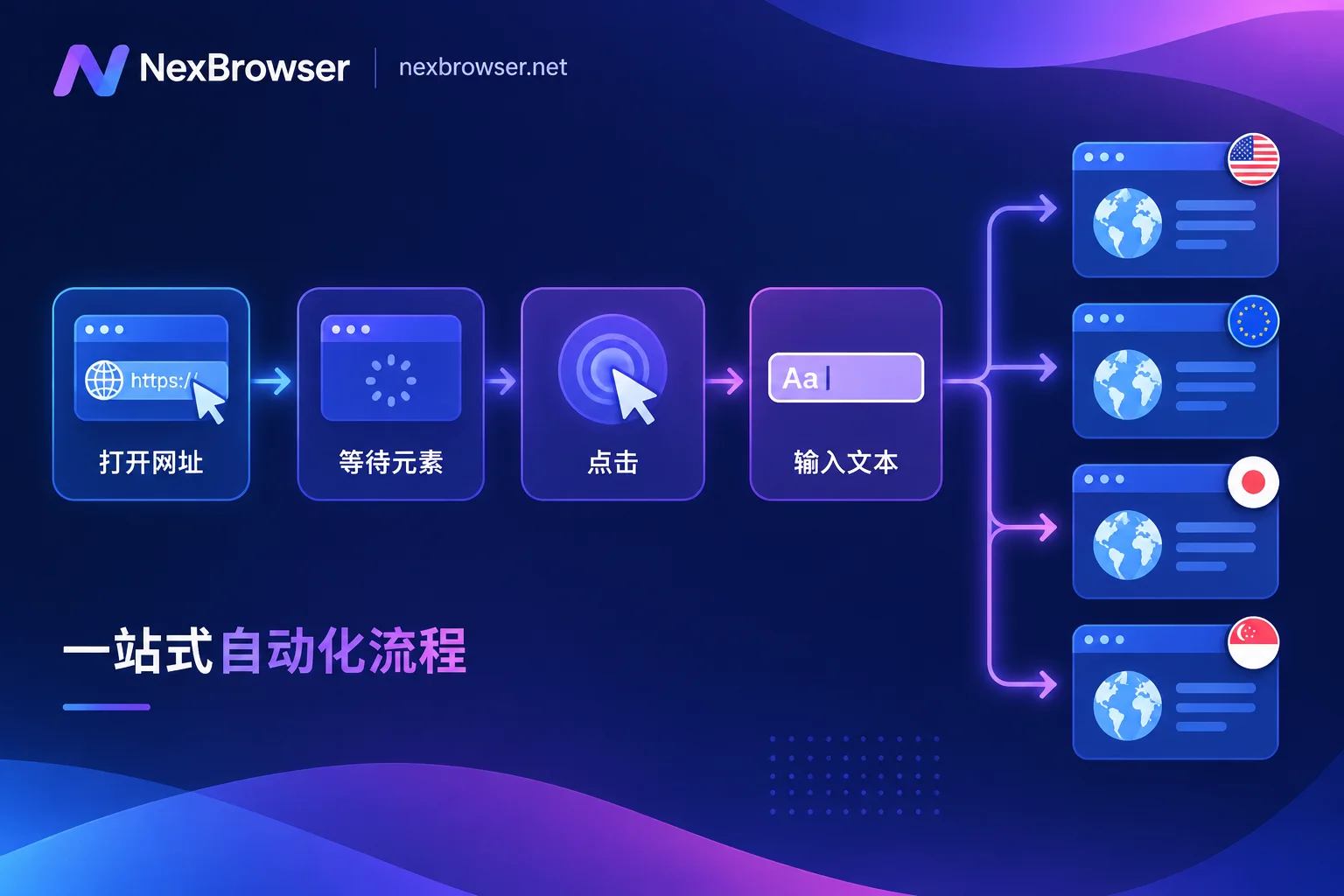
Additionally, addressing the operational needs of medium-to-large teams, NexBrowser offers robust environment collaboration capabilities and automation support. Team members can share isolated environments without revealing sensitive credentials, and with features like window synchronization, Local API, WebDriver, and no-code RPA, they can execute batch compliant operations across accounts, significantly enhancing daily operational efficiency.
4. Deployment and Compliance Checklist for Browser Environment Isolation
To ensure the effectiveness and safety of multi-account environment isolation, operations teams should systematically review the following checklist:
- IP and Environment Parameter Matching Check: Before launching an isolated environment, confirm that the proxy IP's country, timezone, system language, and browser preferred language are logically consistent.
- Hardware Fingerprint Consistency Check: Ensure that high-risk fingerprint parameters such as Canvas and WebGL have unique and consistent noise coverage, avoiding blindly inheriting the host's hardware characteristics.
- Data Isolation Integrity Review: Regularly clear invalid caches in the environment but maintain persistent storage of essential login cookies. Avoid directly copying and pasting sensitive information between different isolated windows.
- Strict Team Permission Boundaries: Allocate environment operation permissions based on the principle of least privilege to prevent individual employee actions from affecting the security of shared account assets.
For cross-border teams dedicated to global expansion, high-standard environment isolation has become foundational infrastructure for safeguarding digital assets. By leveraging professional tools to establish underlying isolation mechanisms, enterprises can steadily advance their multi-account business landscape in a more compliant and efficient manner.



Comments(0)