 NexBrowser指纹浏览器-官方博客Blog
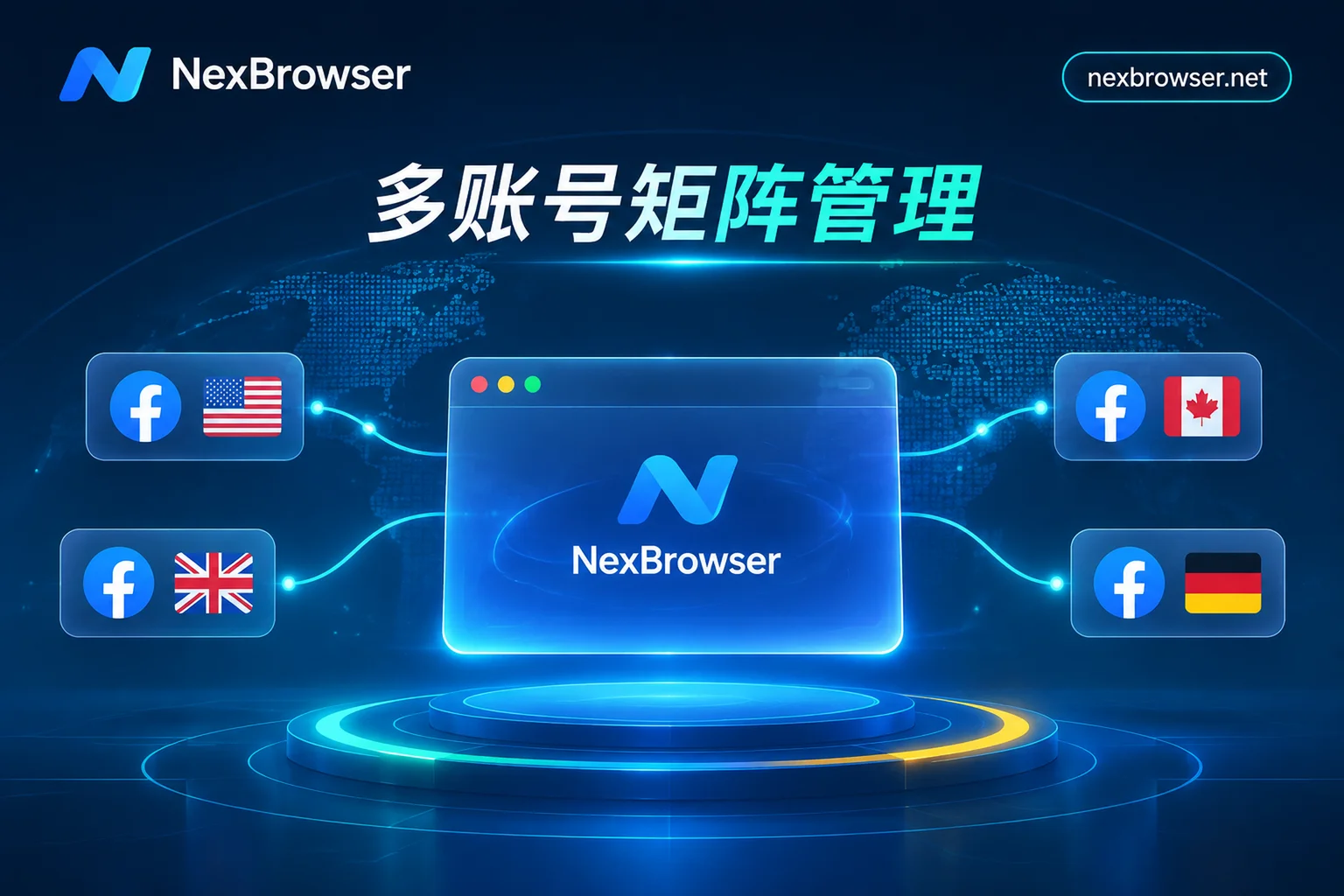
In 2026, as Facebook account risk control continues to escalate, many operators have found that simply relying on "changing IP + anti-association browser" is no longer enough to guarantee absolute account security. When your account matrix scales up, the platform's algorithms capture not only your IP address but also the "regularity" of your operational behavior and the "unnaturalness" of your environment fingerprints.
Why has the traditional "anti-association" mindset failed?
Traditional anti-association focuses on "static isolation," ensuring that each environment's cookies and fingerprints do not collide. However, today's platforms pay more attention to:
- Consistency of operational characteristics: If you perform manual operations in bulk, the similarity of operation traces can easily trigger risk control.
- Self-consistency of fingerprint parameters: Whether fingerprints completely match the IP geolocation, language, and time zone is a core dimension for detecting authenticity.
- Environment lifecycle management: Whether the persistence and anomaly detection of account data (IndexedDB, cache) from registration to maintenance are controllable.
Advanced strategy: Build a deep protection system of "isolation + automation"
To survive long-term in a Facebook multi-account environment, you need a workbench, not just a browser.
1. Deep self-consistency and real-time updates of environment fingerprints
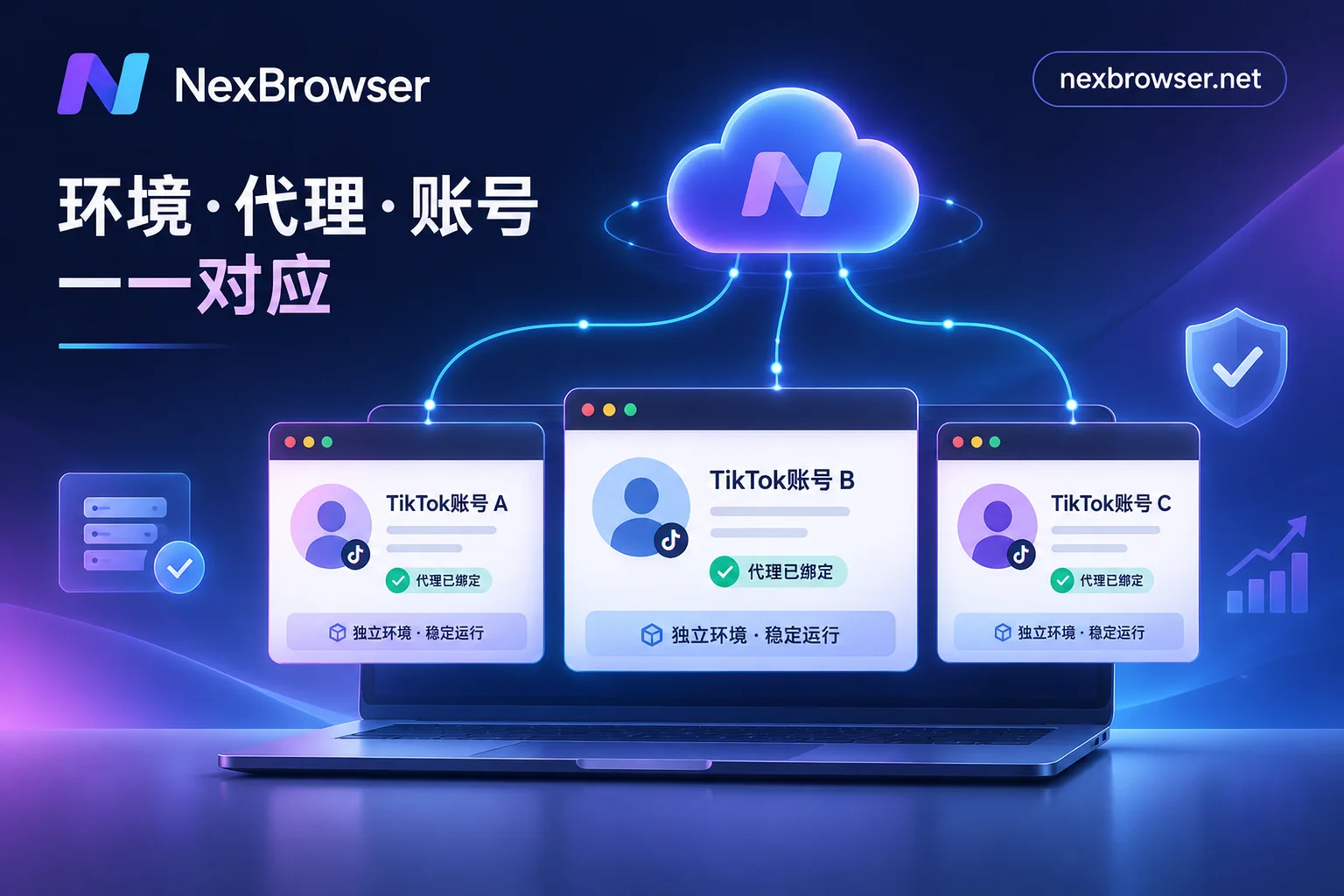
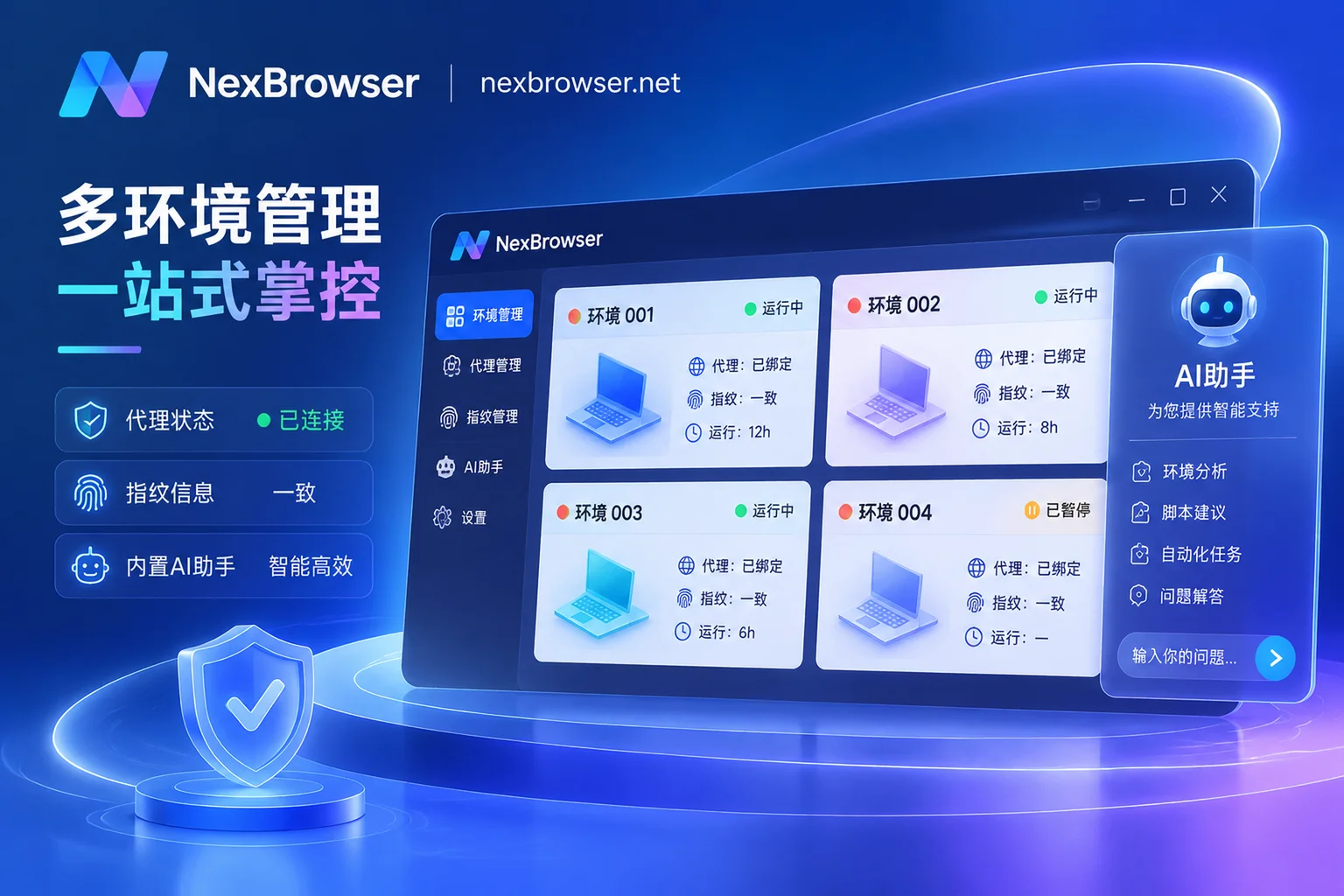
NexBrowser's core advantage lies in the independent generation and self-consistency of its environment fingerprints. In addition to basic Canvas, WebGL, and screen resolution, the system automatically aligns time zone, language, WebRTC policies, and other parameters according to the configured proxy exit. Even if you create environments in bulk, the fingerprint parameters generated for each environment are isolated and legitimate. Learn more: Fingerprint parameters and privacy protection.
2. Leap from "manual account switching" to "built-in AI Agent"
Facing complex Facebook advertising or account nurturing needs, simple RPA scripts often cannot handle unexpected verification logic. NexBrowser's built-in AI Agent can directly control the environment through natural language, completing actions such as form filling, screenshots, and clicks, and can even automatically identify and handle login states, without you having to stare at the screen constantly.
3. Say goodbye to password sharing: A new paradigm for secure team collaboration
If you are operating a matrix, secure collaboration among team members is crucial. Through NexBrowser's permission management, founders can assign different management scopes to different members, enabling password-free environment sharing. Account login information is directly filled in, and members cannot access actual passwords, eliminating internal risks. Learn how to build secure team workflows: Multi-account management and environment isolation.
Build your automated workflow
If your needs are high-frequency automated tasks (such as automatically adding friends or posting updates), it is recommended to use the RPA script function. NexBrowser supports no-code canvas orchestration, loops, and conditional judgments, and can execute tasks independently for each environment without interference.
For teams with development capabilities, through Local API and MCP integration, you can directly connect browser environments to development workflows such as Cursor and Claude Code, achieving ultimate automated scheduling.
Conclusion
The essence of Facebook multi-account operations is the game between "disguise" and "efficiency." NexBrowser not only provides environment isolation but also helps you turn each account environment into an efficient, independent operational stronghold through automation and AI tools. Experience the fully functional free tier now and start your matrix operations upgrade journey.
Note: For more practical tips on account maintenance, please refer to: Complete Guide to Facebook Multi-Account Anti-Association.