 NexBrowser指纹浏览器-官方博客Blog
As TikTok's global market continues to expand into lower-tier regions in 2026 and its content ecosystem becomes further intelligentized, a single account can no longer support explosive business growth. However, for operators, TikTok's risk control mechanisms are also upgrading in parallel: simple "multiple devices and multiple accounts" is no longer a talisman, and the system's scrutiny of fingerprint similarity, IP geofencing, and abnormal operation logic has reached unprecedented heights.
I. The "Survival Red Line" of TikTok Matrixization in 2026
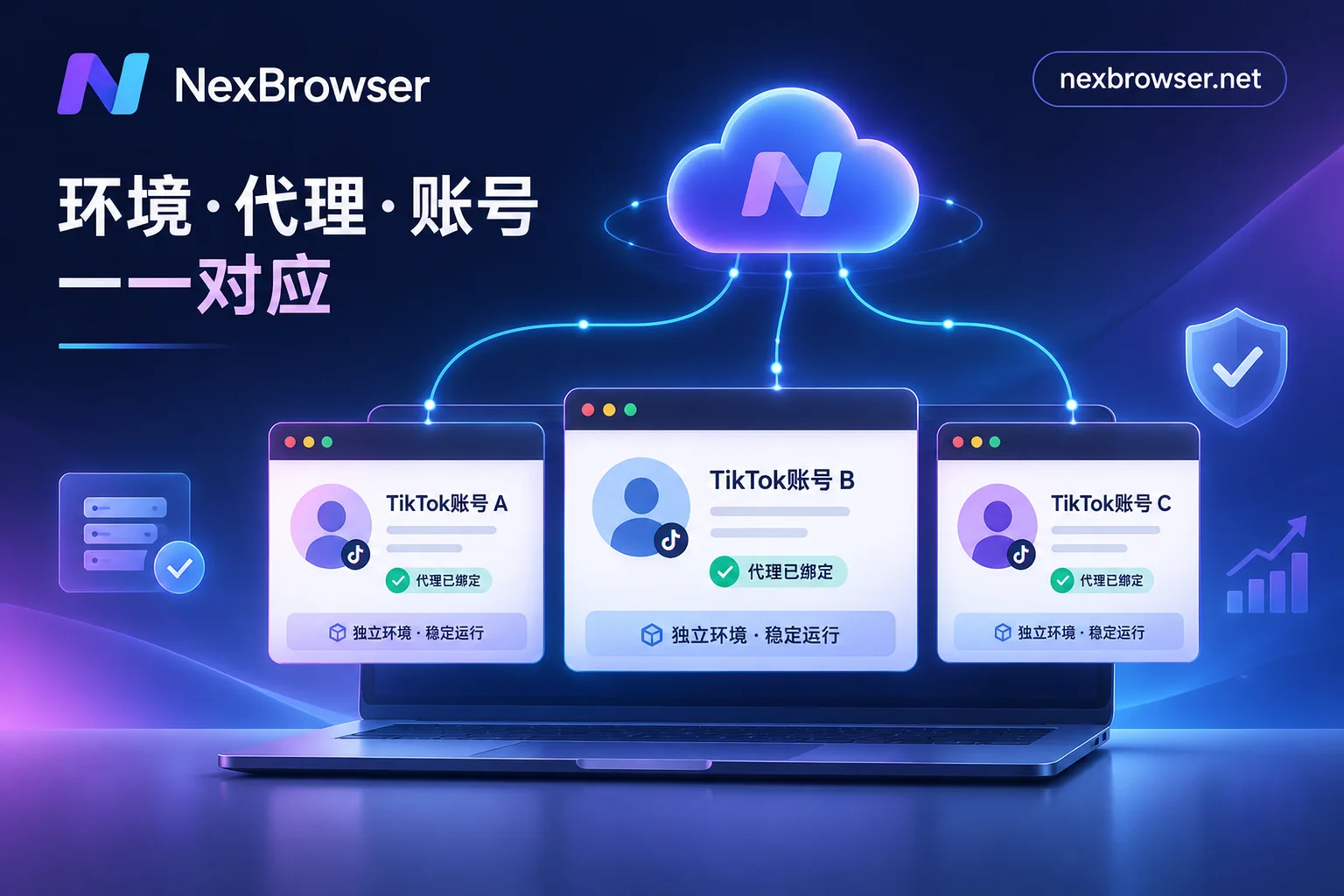
TikTok's current platform risk control does not only focus on whether the IP changes, but places greater emphasis on the "self-consistency" of browser fingerprints. If your environment fingerprint parameters (Canvas, WebGL, time zone, language) do not match the proxy exit IP, or if Cookie synchronization is identified as non-human behavior, account suspension becomes a high-probability event. In the NexBrowser workspace, we see more and more seasoned matrix teams abandoning extensive emulators and instead pursuing a multi-account environment isolation system that is "impeccable" from physical environment to logical behavior.
II. The Paradigm Shift from "Manual Account Switching" to "AI Agent Collaboration"
Traditional TikTok operations often consume a large amount of manpower on clicking, page turning, and even manually filling out forms for verification. But in 2026, efficient matrix teams have entered the "Agent-driven" era.
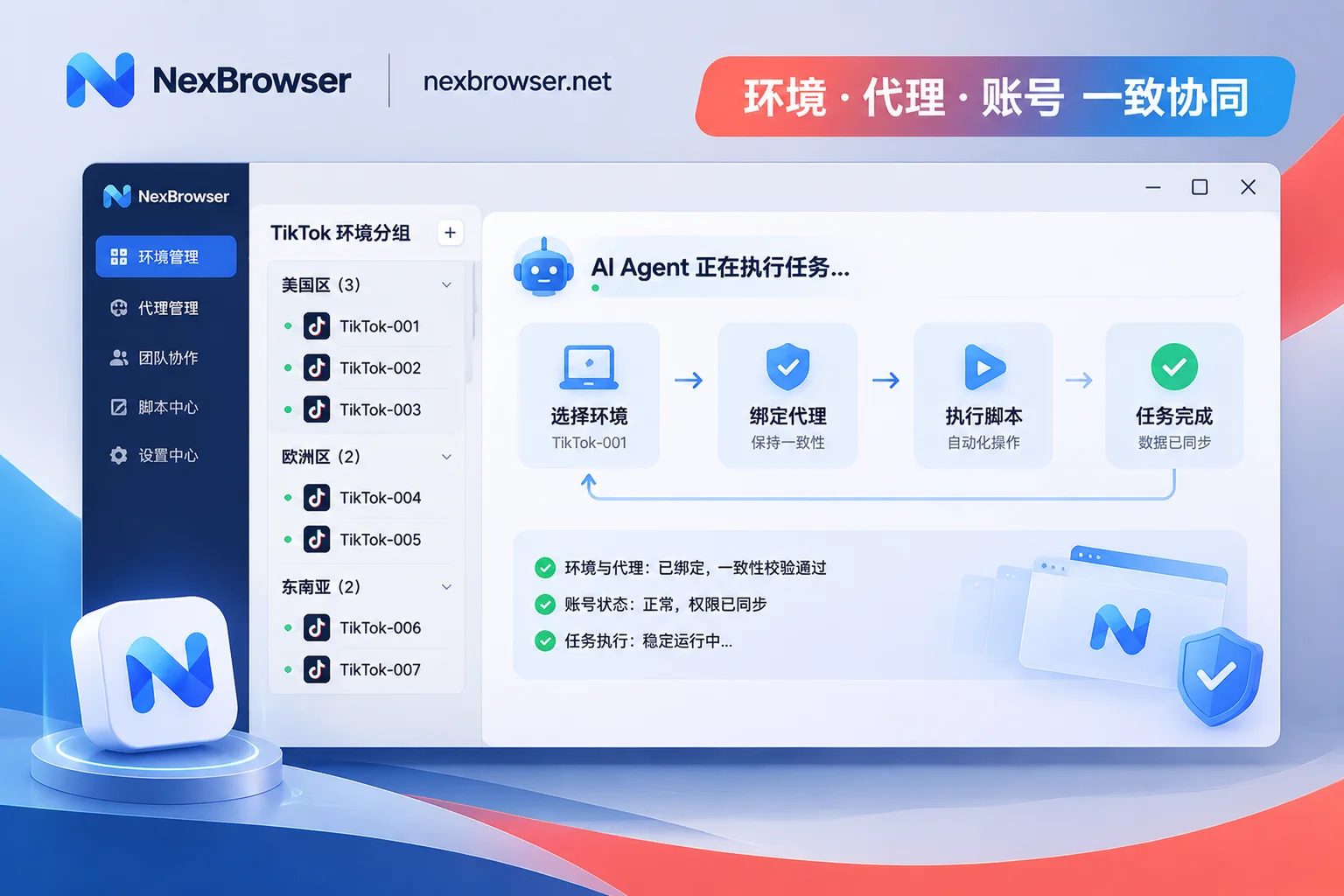
NexBrowser's built-in AI Agent can not only simulate human clicking logic, but also directly take over login sessions and automate complex interactions on TikTok pages (such as video uploads, comment replies, and livestream interactions). Operators only need to issue instructions in natural language, and the Agent can execute in parallel across environments, greatly reducing the time cost of repetitive labor.
III. Developer Perspective: Using Local API to Build an "Unbannable" Automation Foundation
For teams with in-house development capabilities, the Local API and MCP provided by NexBrowser are the core for building an automation middle platform. You no longer need to write error-prone emulator scripts; instead, you can directly call the browser environment and command the browser to complete tasks through Puppeteer, Playwright, or directly through the MCP interface. This approach completely bids farewell to the "stateless" script execution mode, ensuring that every operation carries associated Cookies and independent fingerprints, minimizing risk. View the API documentation to learn how to build your own automation loop.
IV. Avoiding the "Internal Friction Trap" of Team Collaboration
Many TikTok matrix projects fail due to management chaos: password leaks, unclear permission allocation, and inability to trace the source of operations. NexBrowser's team collaboration and permission matrix feature is designed to solve this pain point. Founders can finely allocate permissions to each member and enable password-free account login, which not only protects core assets but also makes all operations "fully traceable."
Conclusion
In today's white-hot competition for TikTok traffic, tool selection directly determines the lifecycle of accounts. From fingerprint privacy protection to precise residential IP matching, NexBrowser provides a full-chain defense and efficiency solution for TikTok matrices. If you are still troubled by account association, start by downloading the latest version of NexBrowser and build your own secure operations moat.
Further reading: For how to avoid common risk control mistakes, refer to Troubleshooting 5 High-Frequency Operational Errors and Anti-Ban Strategies or learn more in the Fingerprint Browser Automation Pitfall Avoidance Guide.