 NexBrowser指纹浏览器-官方博客Blog
When running two or more Etsy shops, the best practice for avoiding account linking is to isolate four layers: account ownership info, network exit, browser environment, and local data and login state. The acceptance criteria for each layer: after switching environments, the fingerprint and exit IP for the same site must not repeat, and there should be no cross-shop login session residue. The Seller Policy effective July 9, 2026, and the Prohibited Items Policy updated August 11, restated that linked accounts may be subject to joint suspension, making multi-shop isolation a must-do before opening stores rather than an optional optimization. Below is a detailed breakdown of the four layers, with verifiable criteria for "what counts as properly configured."
Why Isolation Went from "Optimization" to a Must-Do: What the Joint Suspension Clause Says
Both the Seller Policy (effective 2026-07-09) and the Prohibited Items Policy (updated 2026-08-11) state that when an account violates platform rules or sells prohibited items, Etsy may terminate or suspend that account as well as any accounts Etsy determines are related to your account. This means the risk is not store-level but portfolio-level—one store's problem can affect others.
Etsy's official Help Center ("How to Open a Second Shop on Etsy," 2026-07-23) explicitly allows sellers to open multiple independent business shops with no fixed cap on the number of legitimate shops. However, it prohibits opening duplicate shops that sell the same products to manipulate search results and requires transparent disclosure in public profiles. Compliant multi-store operation and anti-association configuration are two separate things: the former answers "can I open it," and the latter answers "how to avoid being wrongly caught after opening."
Layer 1: Account Ownership and Contact Info—Where Reuse Is Most Likely
Official documentation requires that each shop have an independent Etsy account and a unique registered email; the platform does not support multiple shops under one account. Can one person register two Etsy accounts? Yes, but each account's ownership information must be thoroughly separated.
Commonly reused fields in practice include:
| Field Position | Risk of Reuse | Acceptance Criteria |
|---|---|---|
| Registered email / recovery email | Same email is directly identified as the same entity | Use completely different emails for the two shops, and do not share recovery emails |
| Shop contact info (address, phone) | Platform may cross-reference public data | Each shop's public info points to its own independent entity |
| Public Profile disclosure | Hiding relationships may trigger duplicate shop review | Stay transparent per official requirements, don't deliberately hide multi-shop operation |
| Payment account and settlement info | Official documents do not specify cross-comparison method | Operational experience suggests separation to avoid sharing the same payment entity |
Note: How the platform cross-references payment and address details is not publicly disclosed; these are industry practice judgments, not official regulations.
Layer 2: Network Exit—Do Different Etsy Shops Need Different IPs? Three Hidden Sharing Scenarios
Do different Etsy shops need different IPs? Yes, and "one shop, one exit" means the exit IP when actually accessing should be stable, unique, and verifiable. Changing IP alone is not complete isolation, but the exit layer is the most prone to hidden sharing:
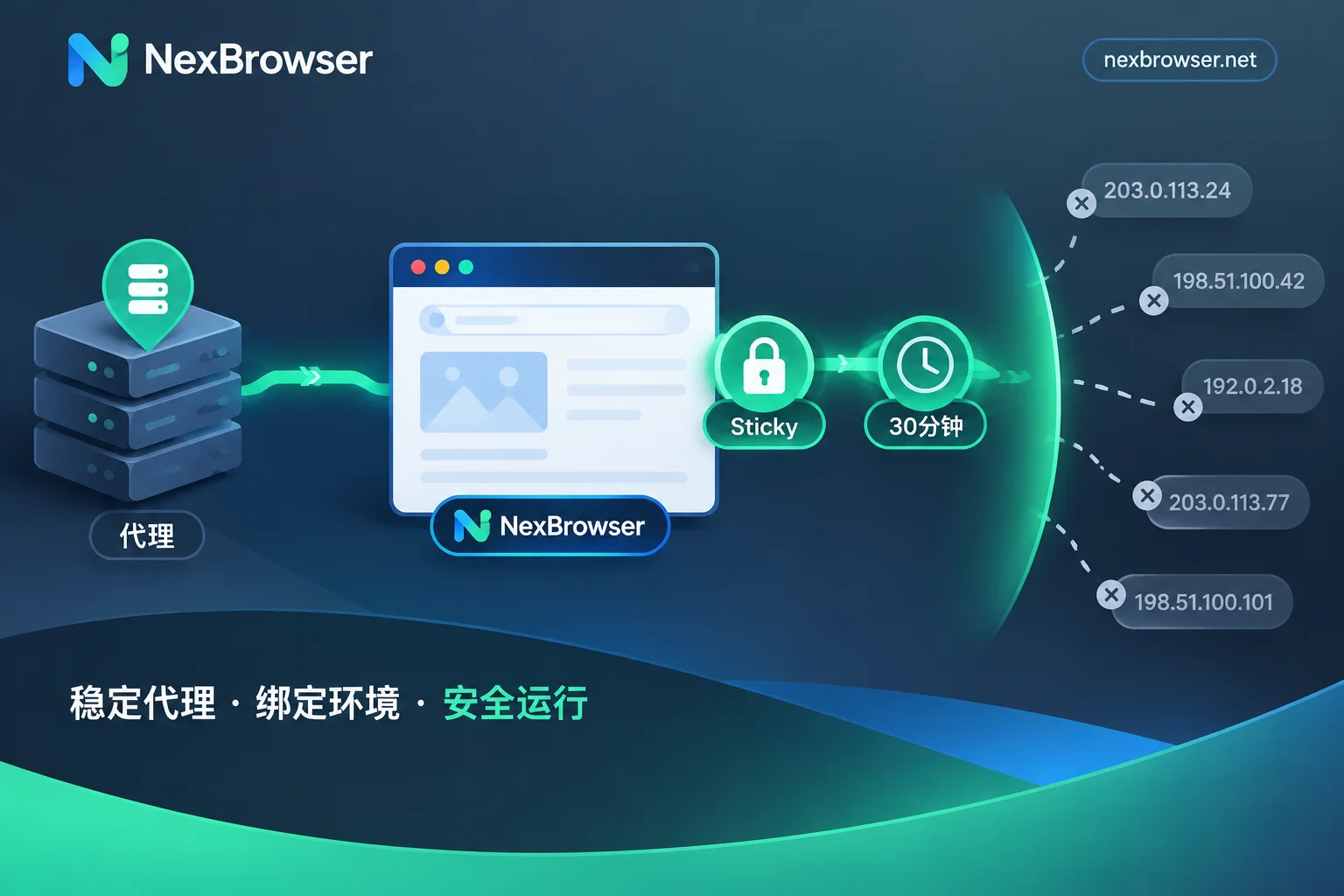
- System-wide proxy switching causing cross-use: Switching proxies at the system level means two shop environments share the same exit IP; refer to Bind proxy IP to browser for troubleshooting.
- Proxy failure falling back to local connection: When the proxy drops and the environment doesn't block, access falls back to the local IP; refer to Common mistakes and troubleshooting for fingerprint browser independent IP configuration.
- WebRTC/DNS bypass requests: Not going through the same exit, leaking real network location.
Acceptance criteria: Each shop environment should have a stable, unique exit IP when accessing, and it should be verifiable at any time via detection pages. A common misconception is treating "changed proxy" as "isolation complete," but the exit layer is just one of four.
Layer 3: Browser Environment—Can Two Etsy Shops Use the Same Computer?
Can two Etsy shops use the same computer? The answer is yes, provided the environment isolation is proper. Multiple tabs, incognito mode, or regular Chrome profiles on one computer still share underlying OS fingerprints and hardware parameters (Canvas, WebGL, AudioContext, etc.) and network exit. The official help center also notes that standard browsers do not support logging into multiple Etsy accounts simultaneously in the same window; separate environments are required.
"Incognito/multiple profiles is enough" is a common misconception. Regular profiles share the same hardware fingerprint and cannot block device-feature-based linking assessments. Regarding how Etsy determines whether accounts are linked, the platform has never disclosed algorithm weights or thresholds. What we can do is thoroughly eliminate controllable shared components.
Layer 4: Local Data and Login State—Cross-Shop Residue of Cookies, Cache, and Autofill
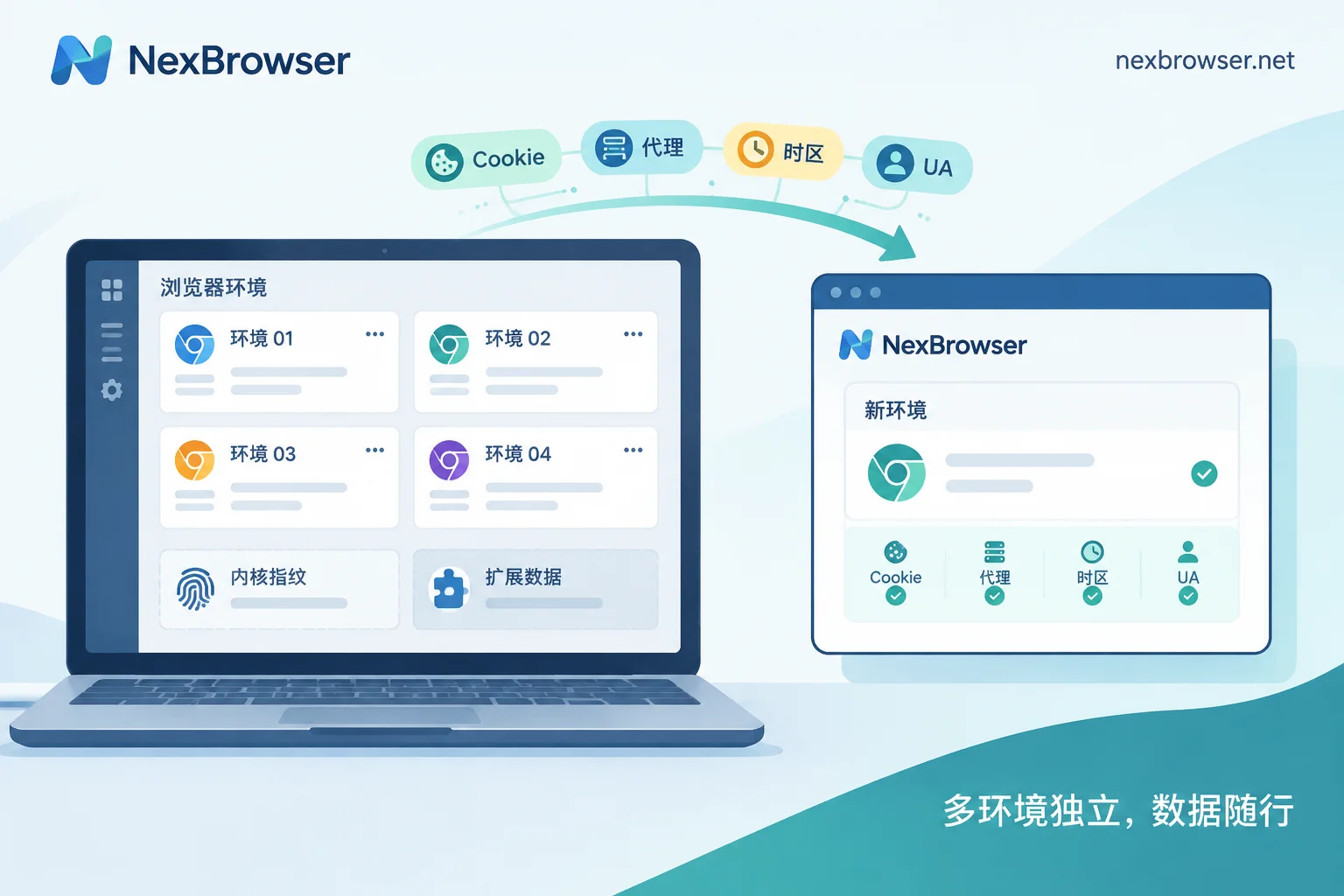
Even if IP and fingerprints are changed, if cookies, localStorage, cache, and browser autofill still flow in the same user data directory, cross-shop login states and historical traces may still interlink. In practice, failures often occur here: after logging into Shop A and switching to Shop B's environment, Shop A's account autofills.
Acceptance criteria: Each shop's local data directory is independent; switching shops doesn't require logging out, and no autofill suggestions from another shop appear. In team handovers, if account passwords and login states are shared via chat tools, you expose Shop B's login state to a location accessible in Shop A's environment—this risk should be assessed; for team collaboration, refer to Cross-border e-commerce team multi-account permission hierarchy management to control handovers.

What You're Most Likely to Miss with Only the First Two Layers: Common Misconfiguration Comparison Table
| Incorrect Practice | Actual Risk | Correct Acceptance Criteria |
|---|---|---|
| Incognito window as isolation | Shares system-level fingerprint and network exit | Independent environment instance with verifiable fingerprint and exit |
| Multiple Chrome profiles as environments | Shares underlying hardware rendering features | Instance-level isolation; hardware parameters don't change with profile |
| System-wide proxy switching | Two shops share the same exit | Proxy bound to a single environment, not system-wide |
| Multiple shops sharing one registration email | Directly recognized as same entity | One shop, one set of ownership info, independent email |
| Proxy drop unnoticed | Falls back to local IP access | Environment bound to proxy; auto-block or alert on drop |
| Multiple shops sharing one user data directory | Cross-shop login state and autofill residue | Independent local data directory per shop |
Each row above can be traced to a layer in the four-layer structure (incognito/multiple profiles correspond to Layer 3, system proxy and proxy drop to Layer 2, shared registration email to Layer 1, shared data directory to Layer 4), helping readers locate their own gaps. Every row maps to the Etsy anti-association isolation best practices, making it easy to find missing items.
Implementing with NexBrowser: One Environment Per Store + Proxy Binding + Exit Cross-Checking
The four-layer checklist can be operationalized with NexBrowser:
- Independent browser environment: Achieves instance-level isolation of fingerprint, cookies, and cache, solving the problem of shared underlying hardware features in regular Chrome profiles (addressing Layers 3 and 4).
- Environment-level proxy binding: HTTP/HTTPS/SOCKS5 proxies are deeply bound to individual environments, not system-wide switching, avoiding exit pollution (addressing Layer 2).
- Exit cross-checking: After opening an environment, verify on detection pages that the exit IP and environment parameters match expectations.
- Team collaboration permissions: Use environment permissions and visibility controls to manage account handovers, avoiding exposed login states across the team.
This capability boundary must be clear: these operations clean up controllable items and facilitate batch checking, but do not promise to circumvent or be immune to any platform judgment.
Capability Boundaries: Claims Without Public Basis
The capability boundaries of Etsy anti-association isolation best practices must be explicitly stated: Etsy has never publicly disclosed the algorithm weights, feature dimensions, or scoring thresholds for determining related accounts, and the platform retains final discretion. Therefore, claims like "similarity below a certain value is safe" or "a certain fingerprint browser can 100% immunize against Etsy association detection" have no official basis. The goal of this article is to clean up controllable environment items and reduce false positives and cascading impacts, not to bypass risk control rules; illegal operations are not exempt just because of environmental isolation. For more discussion on platform risk control logic, refer to Cross-border account risk control.
A One-Page Pre-Launch Four-Layer Checklist
Below is a condensed, checkable checklist for Etsy anti-association isolation best practices to go through before opening shops:
- Account ownership layer: Independent account, independent registration email, independent recovery email, independent contact info, transparent Public Profile disclosure, no duplicate shops
- Network exit layer: Independent exit IP per shop, environment-level proxy binding (not global), no WebRTC/DNS bypass leaks, proxy drops are noticeable
- Browser environment layer: Instance-level independent environment, fingerprint (Canvas/WebGL/AudioContext) not shared with other shops, no regular profile mixing
- Local data layer: Independent directories for cookies/storage/cache, no cross-shop autofill residue, team handovers via controlled permissions rather than chat tools
Recommended configuration order: account ownership first → then create environments → bind exits → re-check all four items before first login. Before opening a second store, run this checklist against existing stores to fill gaps before registering new ones.
FAQ
How many shops can I open on Etsy?
The official policy does not set a fixed cap on legitimate independent shops, but prohibits duplicate shops selling identical products to manipulate search. Each shop requires an independent account and email, and transparent disclosure in public profiles. The number itself is not the issue; whether isolation is clean is.
Can the same person register two Etsy accounts?
Yes. Register independent accounts with different emails and open shops under each. However, the two accounts' ownership info, network exit, browser fingerprint, and local data must not be shared; otherwise they may be flagged as linked.
Can I use the same computer for two Etsy shops?
Yes, provided the environment isolation is proper. Regular Chrome profiles or incognito mode still share hardware fingerprints and network exit; you need instance-level independent environments with respective proxies, and local data directories must be separate.
Do different Etsy shops need different IPs?
Yes. Each shop's exit IP should be stable, unique, and verifiable. Also check for WebRTC/DNS bypass leaks and whether proxy drops fall back to local connections—these hidden cases can invalidate IP changes.
How does Etsy determine linked accounts?
The algorithm weights, feature dimensions, and thresholds are not publicly disclosed; the platform only retains the discretion to determine related accounts. What we can do is clean up controllable factors across account info, network exit, fingerprint, and local data to reduce the chance of false positives.
What should I do if my Etsy shop is suspended for association?
First, self-check the four-layer configuration to see if there are shared traces; then appeal through Etsy's official channels, explaining that each shop is an independent business entity and providing evidence. The outcome depends on platform discretion, with no public success rate data, but a clean configuration is the foundation for an appeal.


Comments(0)