 NexBrowser指纹浏览器-官方博客Blog
A Real Procurement Scenario: Two Brochures Say 'Supports Latest Kernel', but Are They Saying the Same Thing?
You're evaluating Multilogin alternatives for your team. You receive sales materials from two candidate tools, both prominently marked 'Chrome 150 kernel support'. But when you ask, one explains that all new environments will automatically apply the new kernel, while the other vaguely states the new kernel is available as an optional engine. You realize that if you conclude based solely on 'version number match', you might find after switching that historical environments remain on the old kernel, or that fingerprint parameters in new environments contradict each other.
This article addresses the core problem: how to evaluate candidate tools using verifiable metrics rather than marketing speak. We won't create a tool ranking or compare prices and environment counts, but will break down 'kernel generation sync pace' into four verifiable procurement metrics. After reading this checklist, you can directly question the technical staff of candidates and use these methods to compile evidence during trial periods.
First, Look at Public Facts: In July 2026, the Multilogin Mimic Engine Launched with the Chrome 150 Kernel
On July 14, 2026, the official Multilogin changelog announced that the Mimic engine officially launched with the Chrome 150 kernel, optimized Canvas and font mask simulation for new environments, and clearly stated that the new kernel would be applied automatically when launching environments. This information comes from the official Multilogin Release Notes, dated July 14, 2026.
But note, the phrase 'new environments' is important. The official log's wording focuses on mask simulation optimizations for 'new environments'. Whether existing historical environments also get the new kernel or need to be rebuilt is not specified and needs direct confirmation from the vendor. This reminds us that when evaluating any Multilogin alternative, 'support for a kernel' and 'all environments upgraded' are two different things.
Why Kernel Version Numbers Alone Are Insufficient: Detection Looks at Version Contradictions Between UA and Underlying Parameters
You might think that just setting the UA string to Chrome/150 can fool detection. But open-source fingerprint detection tool CreepJS's logic goes far beyond that. CreepJS analyzes API rendering deviations, prototype tampering (i.e., page scripts attempting to modify browser native objects), and version contradictions between the User-Agent and underlying hardware/TLS handshake characteristics to give a Trust Score. The lower the score, the more suspicious the environment.
In other words, if you only change the UA to 150 but the underlying TLS handshake fingerprint, WebGL rendering parameters, and Canvas drawing results remain at old kernel levels, this 'top-heavy' inconsistency increases the probability of being identified as a fake environment. Therefore, when evaluating Multilogin alternatives, don't just look at the claimed kernel version; check whether high-entropy parameters other than User-Agent are updated and consistent after kernel upgrade.
Decomposing 'Kernel Sync' into Four Verifiable Metrics: Lag Days, Historical Environment Coverage, Parameter Consistency, and Upgrade Mechanism
1. Lag Days Between Kernel Version and Chromium Official Stable Version
You can directly ask sales: "What is your current production kernel version? How many days is it behind the Chromium official stable release?" Also, ask for release logs and dates of the last three kernel upgrades, then calculate the average lag yourself. The update pace varies among vendors; base your calculations on their last three release logs and confirm their public release strategy. Coincidentally, ask: "How often do fingerprint browser kernel versions update?" Typically, top vendors follow official releases within weeks, but the exact timing is not uniform.
2. Does the New Kernel Cover Historical Environments or Only Apply to New Environments?
This directly echoes the 'new environments' wording in the Multilogin log. You need to ask clearly: "If we have existing environments, after upgrading to the new kernel, do we need to manually rebuild environments, or will the platform automatically migrate?" If only new environments can use the new kernel, then when switching Multilogin alternatives, you need to additionally assess the cost of migrating historical environments.
3. After Upgrade, Are UA, WebGL, Canvas, Font, and TLS Features Consistent?
This is the most technical and easily overlooked point. During trial, use open-source detection tools like CreepJS to test newly created environments, observing Trust Score and any 'Lies' (i.e., prototype tampering detection). Pay special attention to whether the UA version number matches TLS handshake characteristics (such as JA4 fingerprint—an algorithm summarizing TLS handshake features that reflects the client's underlying network stack version), and whether WebGL and Canvas rendering results show unusual deviations. If some parameters don't match the UA version, the kernel upgrade is incomplete.
4. Are There Gray Release, Rollback, and Old Engine Retention Mechanisms?
Kernel upgrades may introduce compatibility issues. You need to ask: "After the new kernel goes live, if some website automation scripts malfunction, do we support rolling back to the old kernel?" Are there gray release mechanisms where some environments use the new kernel first, and after stability is observed, it's rolled out fully? These mechanisms significantly reduce switching risk and cannot be ignored in evaluation.
The Easily Missed Second Layer: Kernel Upgrades Don't Automatically Fix Old Parameters in Your Existing Environment Templates
Many buyers assume that once a vendor claims new kernel support, all historical environments automatically get new fingerprint parameters. But in reality, some tools only apply the new kernel to newly created environments, leaving historical environments with old parameters. This means when migrating from Multilogin alternatives, you need to distinguish between 'engine version' and 'environment template parameters'.
For example, if your environment template originally configured Canvas perturbation algorithms based on the old kernel, even if the platform upgrades the engine, this template may still use old parameters, causing both old and new environments to have different fingerprint characteristics, increasing inconsistency risk. Therefore, when evaluating, not only ask 'Do you support 150 kernel?', but also ask 'Will historical environment templates automatically upgrade parameters, or do they need manual rebuild?'
What You Can and Cannot Verify in a Trial Period
Free trials are an important part of evaluating Multilogin alternatives, but we should be clear about what they can and cannot verify.
Can Verify:
- Actual engine version: After creating an environment, view
navigator.userAgentvia browser console or detection page to confirm it's the expected Chrome version. - Parameter consistency of new environments: Run tools like CreepJS to see Trust Score and Lies, check if UA, TLS, WebGL, Canvas are consistent.
- Some detection page scores: Run a few mainstream fingerprint detection sites and record results as evidence.
Cannot Verify:
- Future upgrade pace: Free versions usually don't show vendors' future upgrade plans.
- Batch upgrade strategies for historical environments: This usually requires payment to see more management features; free versions can only verify new environments.
- Long-term stability: A few days of trial can't represent months of performance, but it doesn't affect your ability to judge basic capabilities.
Notably, based on public industry news, some tools offer trial free tiers, but the activation conditions and availability vary; refer to the vendor's current official information.
How to Do Batch Parameter Sampling and Kernel Consistency Checks in NexBrowser
If you decide to perform the above verification in NexBrowser, follow these steps. Treat it as a workbench for executing sampling actions; the steps also apply to your existing tools.
- Create a clean control group: Use an isolated browser environment with fingerprint, cookie, and cache isolation. Create two environments with different configurations, ensuring they share no data.
- Verify new environment parameters: Use the Chrome fingerprint simulation feature to confirm the new environment's kernel version and fingerprint parameter combination meet expectations.
- Batch sampling: Use team environment collaboration features to distribute batch-created environments to team members. Each member runs the same detection script on their assigned environment and collects results.
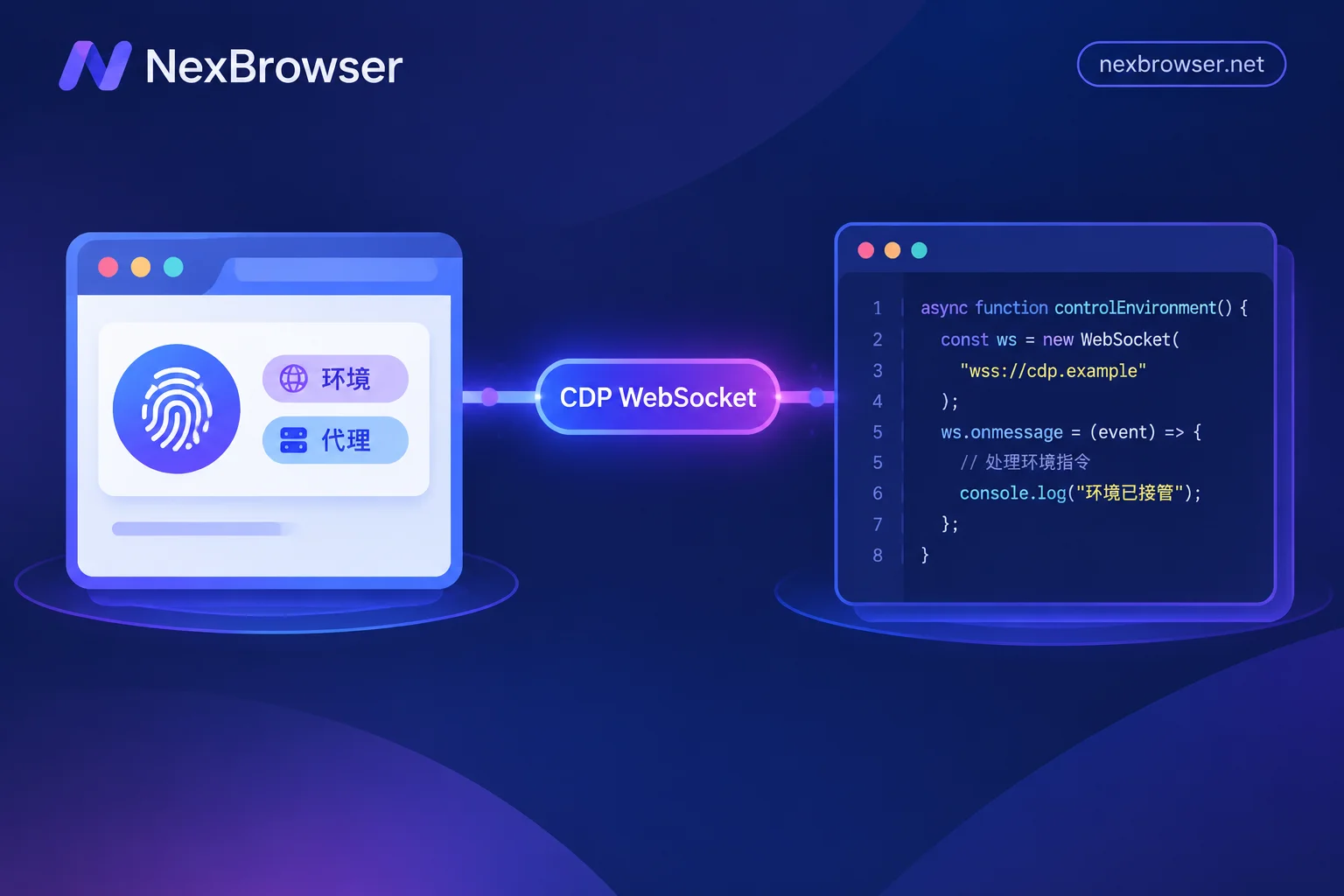
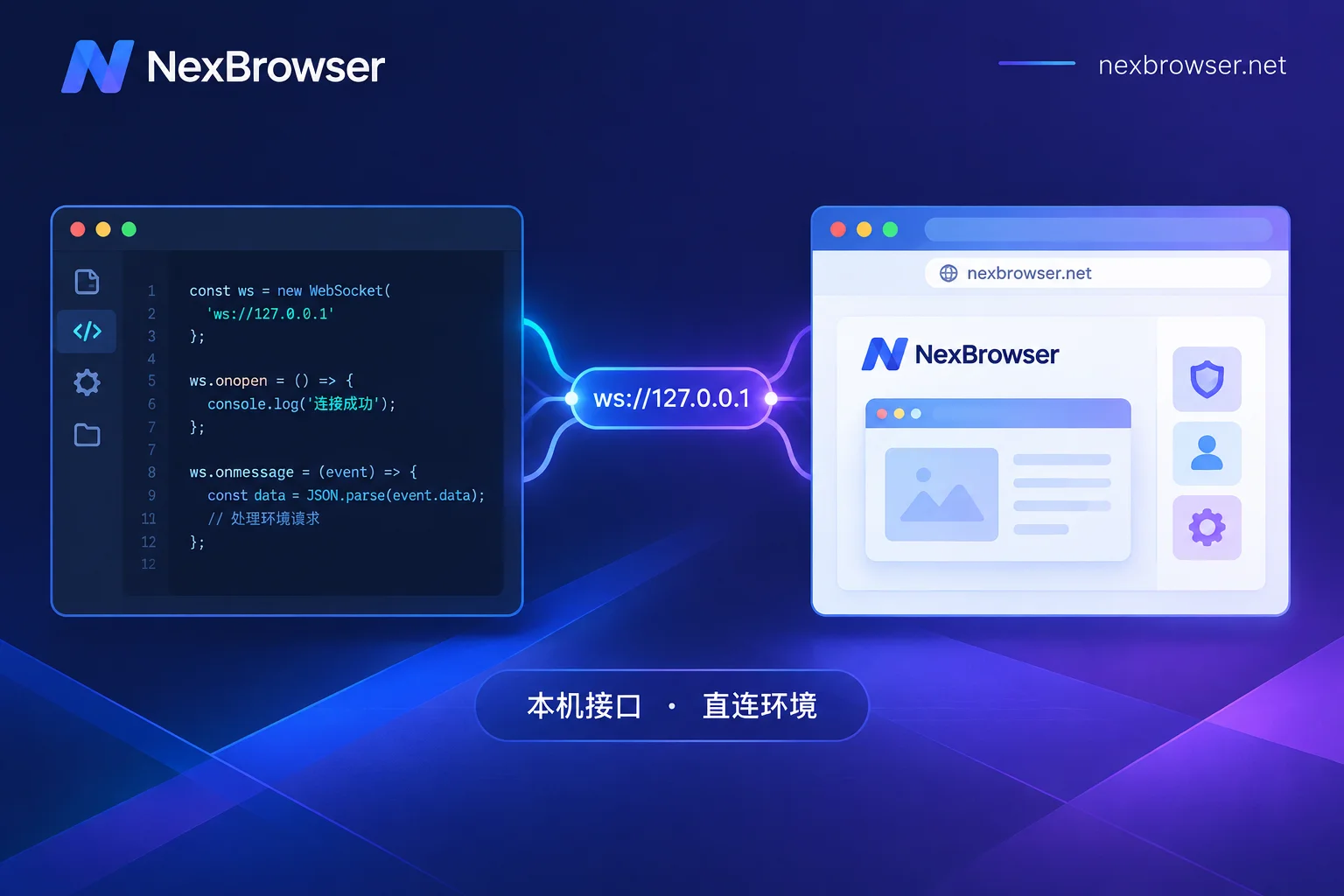
- Summarize discrepancies: Use Local API or WebDriver interfaces to batch export parameters like
User-Agent,WebGL,Canvasfor each environment, compare with third-party detection page results, and identify anomalies. - Eliminate proxy interference: During sampling, ensure all environments use the same proxy exit to avoid detection result deviations due to IP differences, separating proxy issues from fingerprint issues.
This way, within the trial period, you can systematically collect verifiable data for documentation rather than relying on intuition.
Multilogin Alternative Evaluation Checklist: A Table You Can Copy Directly
| Check Item | Verification Method | Pass Criteria | Responsible Person |
|---|---|---|---|
| Kernel version | Check navigator.userAgent | Production kernel version is in the same generation as Chromium official stable, with evidence from last three upgrade logs | Technical Lead |
| Lag days | Ask for release logs and compare with Chromium official | Team-defined threshold (example: no more than two weeks), this is internal acceptance baseline not industry standard | Procurement Decision Maker |
| Historical environment coverage | Ask and provide test environment | Historical environments can auto-upgrade or one-click migrate | Operations Lead |
| Parameter consistency | Use CreepJS detection | Multiple detections yield stable scores, no contradictions between UA and TLS/WebGL/Canvas parameters; score threshold set by team; CreepJS doesn't publish general passing line | Technical Lead |
| Upgrade mechanism | Ask about gray release and rollback | Clear gray release plan and rollback options | Technical Lead |
| Trial verifiability | Test with free tier | Can create environments and export parameters | Operations Lead |
During the trial, be sure to keep screenshots, detection reports, and API export files as evidence; these will be the basis for your final decision.
Which Claims Don't Hold Up Against Public Information: Four Types You Shouldn't Conclude From Marketing Pages Alone
1. 'Supports a Kernel' Does Not Mean 'All Environments Upgraded'
As shown in the Multilogin log, the new kernel only applies automatically to new environments; historical environment status is not publicly promised. Therefore, any similar claims need further verification.
2. Leading Kernel Version Doesn't Mean Higher Detection Pass Rate
Detection pass rate is influenced by multiple factors; kernel version is just the foundation. Tools like CreepJS focus on parameter consistency, not just version numbers.
3. Claims That Kernel Lag Days Lead to Account Bans Lack Public Evidence
In reality, account bans are also affected by proxy cleanliness, account behavior patterns, cookie history, etc., not solely due to kernel lag.
4. Any '100% Bypass Risk Control, Never Get Banned' Claims Lack Public Credentials
This is neither in line with technical reality, nor do any vendors provide authoritative evidence.
Finally, public information sources for this article are limited to the Multilogin official changelog (July 14, 2026) and the CreepJS open-source project (May 10, 2026). Other content is based on general industry experience and is inferential, for selection reference only. We suggest using the checklist above to run sampling checks on both your current tool and candidates, and keep records for comparison. If you need to efficiently batch export environment parameters for verification, try using NexBrowser's Local API to batch export environment parameters before deciding whether to switch. After all, choosing a tool isn't about who has the loudest ads, but who withstands verification.


Comments(0)