 NexBrowser指纹浏览器-官方博客Blog
The most common confusion among operations staff is that the local detection page clearly shows the User-Agent has been changed, but when they go to the target platform, they are asked for verification. The problem is that the detection page looks at the UA string, while the platform side might actually be looking at other fields. According to the Chrome Enterprise release notes, starting from Chrome 145, the UserAgentReduction policy has been removed, making the simplified UA the default. This directly changes how we troubleshoot environment consistency.
First, the facts: Chrome 145 removes UserAgentReduction policy, simplified UA becomes default
According to the official Chrome Enterprise release notes (confirmed in July 2026), starting from Chrome 145, the UserAgentReduction policy configuration has been completely removed and no longer takes effect. Whether on desktop or mobile, Chrome now sends the simplified User-Agent string by default. This means that the old practice of disabling UA simplification via policy to maintain the full UA is no longer valid. Websites must explicitly request the high-entropy version and system fields via Client Hints (UA-CH). The official log is clear: this is a fixed configuration change, not a temporary experiment.
What remains in the simplified UA: frozen version numbers and moved high-entropy fields
What does the simplified UA string look like? After Chrome implements User-Agent simplification, the browser version number in the HTTP request header User-Agent is frozen to the <major>.0.0.0 format, for example, Chrome/145.0.0.0. In other words, the server can only see the major version number from the UA string, and cannot obtain the full minor version information. If the server truly needs the minor version, it must rely on the Accept-CH mechanism to explicitly request the Sec-CH-UA-Full-Version-List request header.
So to answer "which high-entropy fields can still be obtained," you need to look at what Client Hints provides: full version list, architecture, platform version, and bitness have all been removed from the UA string.
How UA-CH works: site explicitly requests, browser returns on demand
To understand how to troubleshoot, you must first understand the negotiation mechanism of UA-CH. The following mechanism is based on MDN Web Docs' explanation of NavigatorUAData.getHighEntropyValues() and Sec-CH-UA-Full-Version-List. Here is the core answer to "What is User-Agent Client Hints."
If a site wants to obtain high-entropy fields, it needs to include Accept-CH in the response header, declaring which hints it needs. The browser will then include the corresponding Sec-CH-UA-* headers in subsequent requests. For example, if the site requests the full version list, the subsequent request headers will include Sec-CH-UA-Full-Version-List. On the frontend, developers can use navigator.userAgentData.getHighEntropyValues() to asynchronously fetch high-entropy fields such as architecture, bitness, platformVersion, and fullVersionList.
Note particularly that the calling permissions of this API are also controlled by the HTTP header Permissions-Policy: ch-ua-high-entropy-values. This permission control comes from the specification definition; whether a site actually enables it is a site-side configuration, and public information does not explain the enabling status of each site. If the page is restricted from this permission, then even if you call getHighEntropyValues(), you may not get the data. This means that the provision of high-entropy fields is conditional and on-demand, not a fixed value.
Three sources must be consistent: request header UA, Sec-CH-UA-* series, and JS-side userAgentData
Now the key point. In the same environment, there are at least three sources describing the same device information:
| Source | Field Examples | Description |
|---|---|---|
| Request header UA | User-Agent: Mozilla/5.0 ... Chrome/145.0.0.0 | Simplified UA, version number fixed to <major>.0.0.0 |
| UA-CH headers | Sec-CH-UA, Sec-CH-UA-Full-Version-List | Returned only after the site explicitly requests via Accept-CH |
| JS API | navigator.userAgentData.getHighEntropyValues() | Asynchronously fetches high-entropy fields, subject to Permissions-Policy |
These three sources describe the same device and should correspond to each other. If you only change the UA string while the Sec-CH-UA-* headers or the JS-side userAgentData still return the original values, this creates a "navigator.userAgentData is inconsistent with User-Agent" problem. Public information does not disclose how platforms compare these fields; from a technical perspective, the only thing that can be determined is that if the three descriptions in the same environment contradict each other, this contradiction is observable at the protocol level. This is a technical inference and does not constitute a judgment on any platform's risk control behavior.
Three configurations most prone to problems: only changing strings, extensions overwriting headers, and batch templates not updated
Combined with actual operations, the three most common scenarios that cause inconsistency are:
- Only modifying the UA string, not synchronizing the high-entropy field sources. This is the most common old habit. Changing the UA string only moves one field in the request header, but the Sec-CH-UA- series headers might be automatically generated by the kernel. If the kernel does not update them accordingly, the two will not match. Many people change the User-Agent and still get identified as an abnormal environment; the reason often lies here: the request header is changed, but the Sec-CH-UA- series generated by the kernel does not follow.
- Using browser extensions or proxy middleware to rewrite request headers. This method can change the HTTP-layer UA and Sec-CH-UA-*, but the JS-side navigator.userAgentData is directly provided by the browser kernel, and extensions may not be able to interfere. If the extension only changes the outer layer, the JS layer outputs the original value, which may cause a layer split.
- Teams reuse old batch environment templates, where the UA in the template does not match the Client Hints output by the kernel. Many fingerprint browsers allow batch creation of environments, and templates often hardcode the UA string. If the template's UA is an old version, and the kernel upgrade has changed the output Client Hints, the two will not match.
Each type of problem requires different validation methods, and you need to check them layer by layer.
Layer-by-layer self-check order: first locate which layer is inconsistent, then decide what to change
When facing such problems, it is recommended to troubleshoot in the following order, not to change things arbitrarily at first:
- Step 1: Check the request headers. Open developer tools, look at the network panel for a request's headers, and confirm whether the User-Agent and Sec-CH-UA-* series point to the same browser and platform. For example, if the major version in the UA string is 145, but the Sec-CH-UA-Full-Version-List returns a full version list pointing to a different major version, that is an inconsistency.
- Step 2: Check the JS side. In the console, execute
navigator.userAgentData.getHighEntropyValues(['architecture', 'bitness', 'platformVersion', 'fullVersionList']), and verify whether the return value matches what you saw in step 1. Note that the return value is asynchronous. If an error occurs or you cannot get the value, it may be due to Permissions-Policy restrictions. The distinction between "can't get" and "get wrong value" is important; the latter is more critical. - Step 3: If you cannot get high-entropy fields, first check Permissions-Policy. If the response header contains restrictions on ch-ua-high-entropy-values (syntax per MDN's Permissions-Policy documentation), the API may not return high-entropy information. Whether the restriction comes from the site policy or middleware rewriting requires layer-by-layer comparison of response headers to determine; public information does not provide a universal conclusion.
The purpose of the order is to "locate the layer first, then change configuration." Change only one thing at a time, and re-test after each change to attribute the cause. Otherwise, if you change multiple things at once and a problem occurs, you won't know which step caused it.
Centralized parameter verification and batch sampling in NexBrowser environment
For multi-account teams, single-environment troubleshooting is only the first step. The consistency of batch environments requires institutionalization. NexBrowser provides independent browser environments with fingerprint/Cookie/cache isolation, and supports Chrome fingerprint simulation. Environment parameters can be viewed and adjusted centrally in one place, making it easier to complete the self-check actions from the previous section in the same environment entry.
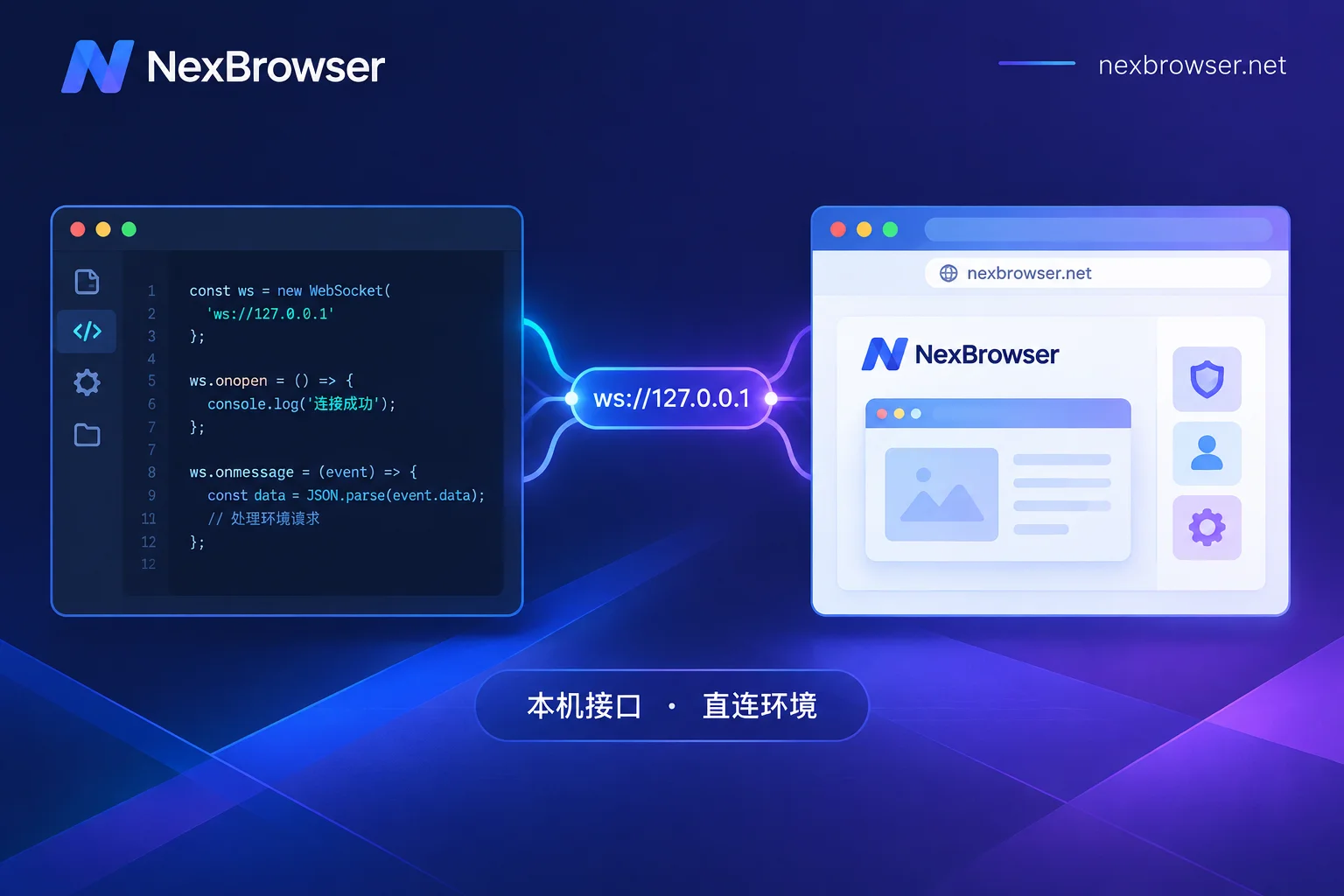
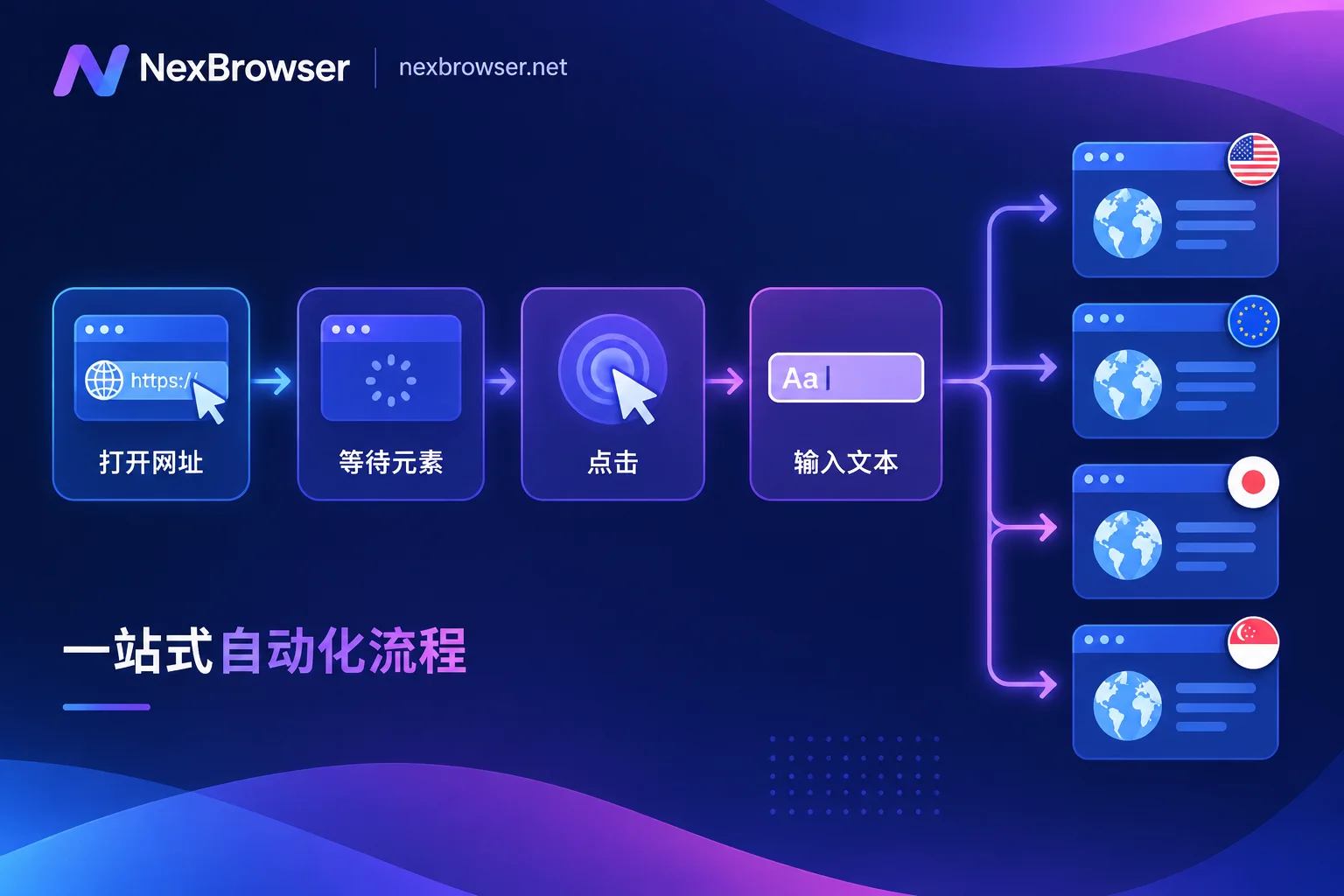
Team environment collaboration features help unify template standards. For example, environment templates distributed to all members use the same set of UA and Client Hints settings, preventing members from modifying them individually and causing divergence. In addition, NexBrowser provides Local API and WebDriver interfaces, enabling teams to script the above self-check process and run the same verification flow across multiple environments. The specific parameters that can be read depend on the actual interface documentation. These are only for ease of inspection and adjustment; how to use them depends entirely on your scenario.
Common claims comparison: which conclusions are not supported by existing public information
Finally, let's sort out a few easily miscommunicated claims:
- "Changing the UA string equals changing the environment identifier" — This does not hold. High-entropy fields have other sources; UA is only one of them.
- "The local detection page showing normal means the server sees consistency" — Not necessarily. The detection page may only read the UA, while the server may request Client Hints, and the two sources of information are not synchronized.
- "Certain parameter combinations can bypass risk control" — There is no public source, so no judgment is made. Because the specific comparison methods of each platform's risk control are not public, we can only adjust based on the principle of "self-consistency of description."
This article's conclusions are based only on the official Chrome 145 removal of UserAgentReduction and MDN specifications, and do not involve any platform's internal logic. Your goal should be to maintain self-consistency in your descriptions, not to pursue a fixed set of "magic parameters."
It is recommended that you start with one or two environments at hand, perform a verification according to the layer-by-layer order above, and only after confirming no cross-layer conflicts, extend it to batch templates. If your team has a large number of environments, consider making this verification a fixed pre-launch check item, using tools to assist with batch sampling.


Comments(0)