 NexBrowser指纹浏览器-官方博客Blog
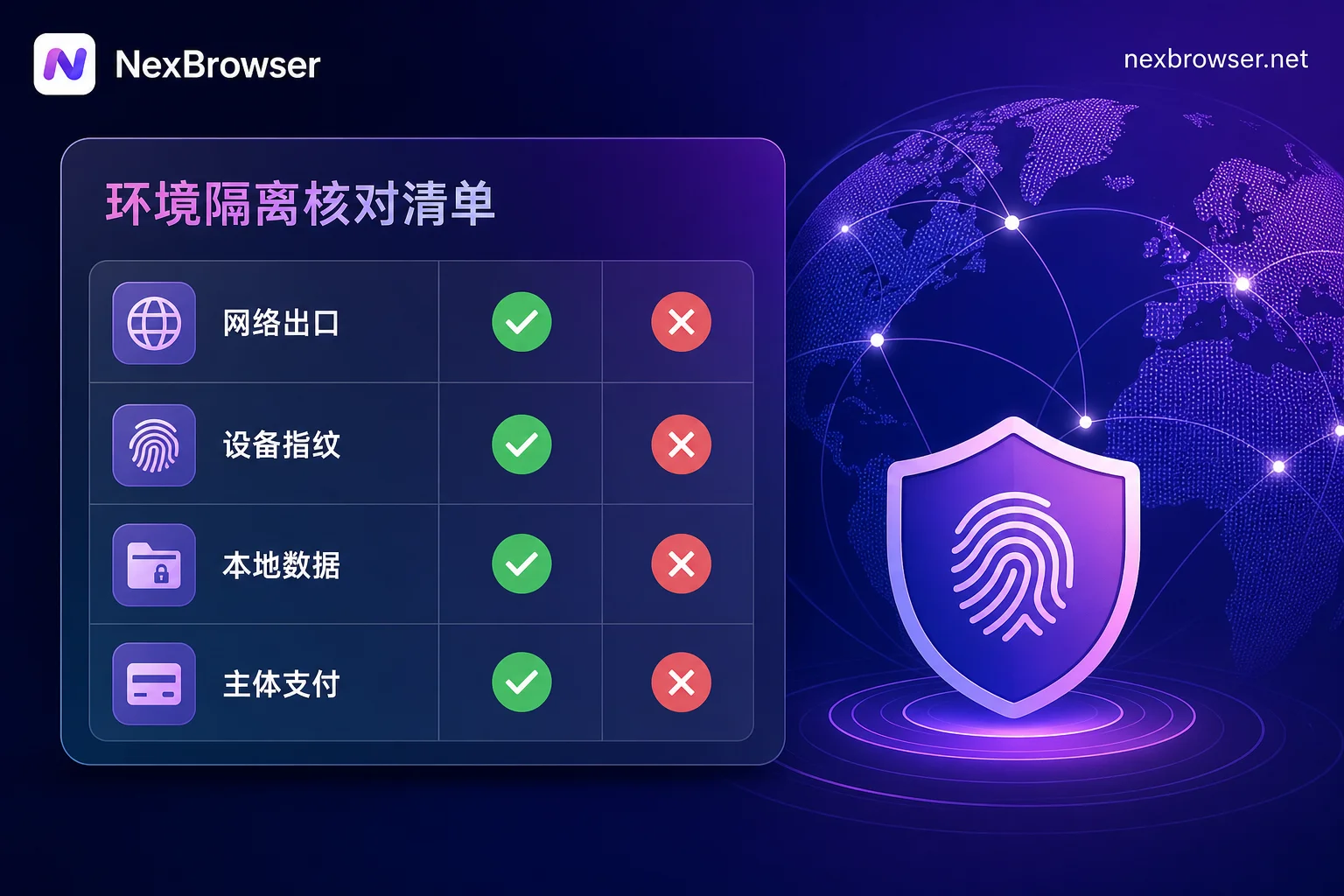
To determine whether your eBay seller account anti-association fingerprint browser setup is sufficient, check only four conditions: whether the network exit is independent, whether device and browser fingerprints are isolated, whether local data has residual traces, and whether entities and payment settlements overlap. The first three layers can be covered by a fingerprint browser, but the fourth layer can only be resolved through account profile planning. By 2026, eBay's official policies and risk control models show that simply changing IPs is far from enough.
First, Distinguish Compliance from Violation: How Many Stores Is eBay Allowed to Open, and What Is Actually Prohibited
Many sellers mistakenly believe that eBay completely prohibits one person from having multiple accounts. According to eBay's official Multiple accounts policy (updated May 2026), eBay allows sellers to operate multiple accounts based on legitimate business needs, such as distinguishing product lines or brands. What is actually prohibited is using multiple accounts to bypass sales limits, evade violation penalties, or manipulate search and reviews.
Therefore, the first step in isolating multiple eBay stores is not to rush into configuring tools but to confirm that your multi-account business itself is compliant. If the entity planning itself has issues, no matter how refined the tool-level isolation, it will not change the outcome of accounts being jointly sanctioned.
How Is eBay Account Association Determined: What Signals Do the Four Layers Look At
EBay's association detection model covers signals from four layers (based on public technical analysis, not officially published models). Understanding these signals helps you know which layer your tools need to address.
| Layer | Signal Dimension | Typical Detection Points | Tool Coverage |
|---|---|---|---|
| Network Exit | IP, Geolocation | IP location, DNS/WebRTC leaks | Coverable |
| Device & Browser Fingerprint | Canvas, WebGL, Fonts, Resolution | Rendering hash, system font list | Coverable |
| Local Data | Cookies, Cache, Local Storage | Login state, cross-site residuals | Coverable |
| Entity & Payment Settlement | Bank accounts, KYC, shipping/return addresses | Payment account, legal representative tax ID | Not coverable |
The multi-profile mode of regular browsers cannot achieve environment-level isolation because they share the underlying hardware fingerprint. This is why eBay seller account anti-association fingerprint browser setup can only cover the first three layers.
Layer 1: Network Exit – What Does a Truly Independent Exit Mean for Each Store
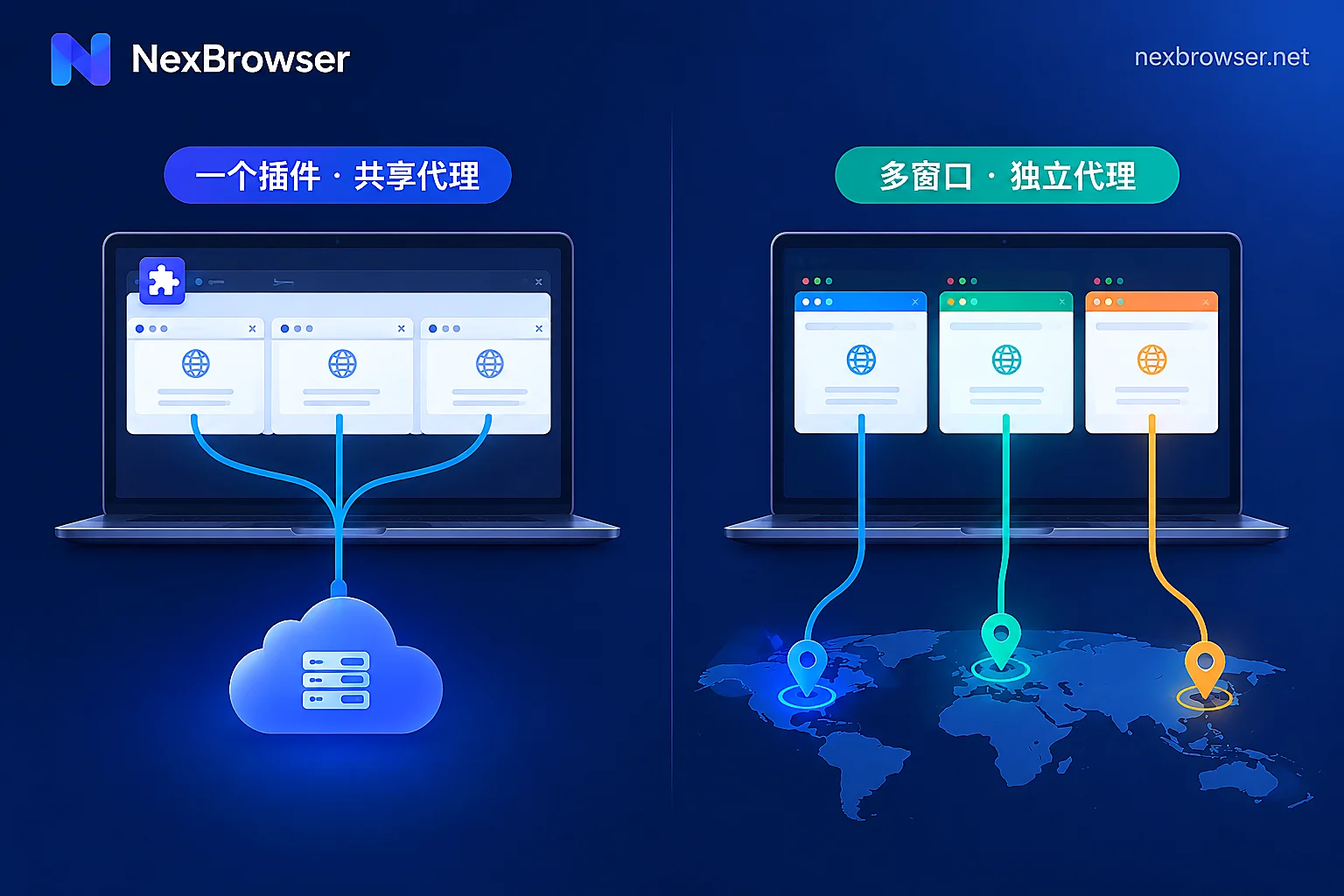
Do eBay stores need different IPs? Yes, but “different IPs” does not equal an “independent exit.” If the proxy is bound to the system globally, visiting other websites within an environment may leak your real address. Truly independent requires three conditions: the proxy is bound to a single environment rather than globally, DNS follows the proxy resolution, and WebRTC does not leak the real IP.
In this layer, you can bind a proxy to a single environment, see Proxy IP Binding to Browser; also ensure WebRTC does not leak your real address, see WebRTC Fingerprint Leak Prevention.
Acceptance Criteria: Simultaneously open multi-store environments, visit browserleaks.com/webrtc to check if WebRTC exposes your local address; visit ipinfo.io or whoer.net to verify the exit IP, location, and browser timezone match.
Layer 2: Device & Browser Fingerprint – Configuration Items and Self-Consistency Criteria for One Store per Environment
Can two eBay accounts be used on the same computer? Yes, but only if you have environment-level isolation on the same computer, not just window switching. A fingerprint browser can make parameters like Canvas, WebGL, fonts, and resolution different between environments. Note that it's not about being as random as possible, but that the parameter combinations are internally consistent. For example, if the resolution is set to 1366×768 but the system font list includes Apple-specific fonts, this combination is more likely to be flagged.
Acceptance Criteria: In each environment, open browserleaks.com/canvas and /webgl, record hash values, and compare horizontally to ensure they are not repeated; also check that parameter combinations are reasonable. Can a fingerprint browser log into the eBay backend? Of course, it is a browser after all, just each environment has an independent identity.
Layer 3: Local Data & Login State – Cross-Store Residuals in Cookies, Cache, Autofill
The local data layer is the most overlooked. Cookies, local storage, cache, autofill, and password management—any one shared across stores can become an association signal. For example, a shipping address saved in Store A's environment appearing in Store B's autofill is a clear overlap.
Acceptance Criteria: After logging in in environment A, open environment B and check if A's login state, cookies, or autofill records appear. If there is no residual, it passes. Special reminder: do not copy environments or templates, as local data will be copied along.
Layer 4: Entity & Payment Settlement – Why This Layer Cannot Be Changed by Browsers
Can multiple eBay accounts use the same payment account? eBay's official policy does not explicitly prohibit sharing payment accounts, but payment accounts belong to the entity and payment settlement layer, which is a directly penetrable association signal for the platform. In practice, plan an independent payment account and return address for each store. The capability boundary of fingerprint browsers is strictly limited to device fingerprint simulation, independent proxy binding, and local data isolation; they cannot modify the legal entity, tax ID, bank payment account, or shipping/return addresses bound in the platform backend. This layer can only be solved by account entity planning.
If multiple accounts share the same payment account or return address, even if the first three layers are fully configured, the platform may still determine association. Moreover, if one account is severely restricted, the platform will impose joint restrictions on all associated accounts under that seller (based on eBay's official Account Restrictions and Suspension Help Page). Therefore, the entity layer must be planned before opening a store.
What Is Most Likely Leaked When Only Doing the First Three Layers: Common Misconfigurations Table
Many sellers configure the first three layers, but the following misconfigurations can render isolation ineffective.
| Common Misconfiguration | Problem | Correct Approach |
|---|---|---|
| Proxy set to system global | Multiple environments share exit IP | Bind proxy to each environment individually |
| Reusing the same template across environments | Fingerprint parameters identical | Generate or modify parameters independently for each environment |
| Only switching windows on same device | Hardware fingerprint not isolated | Use environment-level isolation tool |
| Sharing the same payment account across stores | Entity layer overlap | Use independent payment account for each store |
| Sharing the same return address across stores | Entity layer overlap | Plan independent return address |
For proxy binding setup issues, refer to Common Errors and Troubleshooting for Fingerprint Browser Independent IP Configuration. For similar platforms, you can also refer to Etsy Anti-Association Account Isolation Best Practices to understand environment isolation. Note that the above table does not substitute actual acceptance; you must self-check item by item before opening a store.
Implementing in NexBrowser: Independent Environments + Proxy Binding + Multi-Store Cross-Checking
To implement eBay seller account anti-association fingerprint browser setup in NexBrowser, break down the first three layers into three sets of actions: independent browser environments for device fingerprint and cookie/cache isolation; HTTP/HTTPS/SOCKS5 proxy management to bind exits to individual environments rather than system global; window synchronization and team environment collaboration for batch verification during multi-store spot checks and personnel handovers.
But make it clear: NexBrowser cannot change the payment account, legal representative tax ID, or shipping/return addresses bound in eBay's backend. This is the tool's capability boundary; do not expect it to bypass the platform's entity compliance requirements.
Capability Boundary: Claims That Have No Basis in Public Policy
Regarding anti-association, there are many claims that have no basis in official policy and can be ignored:
- “Using residential proxies or fingerprint browsers can 100% avoid associated bans” – ignores the penetration risk of entity-layer data.
- “Fingerprint browsers can circumvent new store sales limits or joint accountability for penalized accounts” – tools cannot change platform rules.
- “The platform's specific risk control parameters and scoring thresholds can be reverse-engineered” – these are undisclosed information with no basis.
This article is based on official eBay help pages (updated 2026) and publicly available technical signal descriptions, not undisclosed parameters.
One-Page Pre-Opening Four-Layer Checklist
Before opening a new store, check off item by item according to the following eBay seller account anti-association fingerprint browser configuration checklist:
| Layer | Configuration Action | Acceptance Criteria | Result |
|---|---|---|---|
| Network Exit | Bind proxy to individual environment | Multiple stores have mutually different exit IPs | Pass/Pending Fix |
| Device Fingerprint | Independent environment configuration | Fingerprint hashes different and self-consistent | Pass/Pending Fix |
| Local Data | Clear cookies and cache | No cross-store login state residuals | Pass/Pending Fix |
| Entity Payment | Independent payment account | No shared accounts and addresses | Pass/Pending Fix |
It is recommended to self-check item by item before opening a new store. First, confirm that there is no overlap in the entity and payment account planning, then use independent environments and environment-level proxy binding to configure the first three layers and accept them individually.
FAQ
How many stores can eBay open?
EBay officially allows sellers to open multiple accounts for different product lines or brands, with no explicit limit. However, multiple accounts must be based on legitimate business needs and cannot be used to bypass sales limits or evade penalties; otherwise, they will be deemed non-compliant.
Do multiple stores need different IPs?
Yes, multiple stores need different network exit IPs, but more importantly, IPs must be bound to independent environments, and DNS and WebRTC must not leak real information. Simply changing IPs without isolating environments can still lead to association due to other layer signals.
Can two eBay accounts be used on the same computer?
Yes, but you must use an environment-level isolation fingerprint browser, not two windows or regular browser profiles. Ensure each account has independent fingerprints, cookies, and proxy, and verify there are no local data residuals.
Can multiple accounts share the same payment account?
EBay's official policy does not explicitly prohibit sharing payment accounts, but payment accounts belong to the entity and payment settlement layer, which is a directly penetrable association signal. In practice, plan an independent payment account and return address for each store.
Can eBay stores be appealed after being associated and banned?
EBay provides an appeal channel, but success depends on the nature of the violation and evidence. If severely restricted, the platform will jointly handle all associated accounts. When appealing, you need to provide relevant business compliance proof.



Comments(0)