 NexBrowser指纹浏览器-官方博客Blog
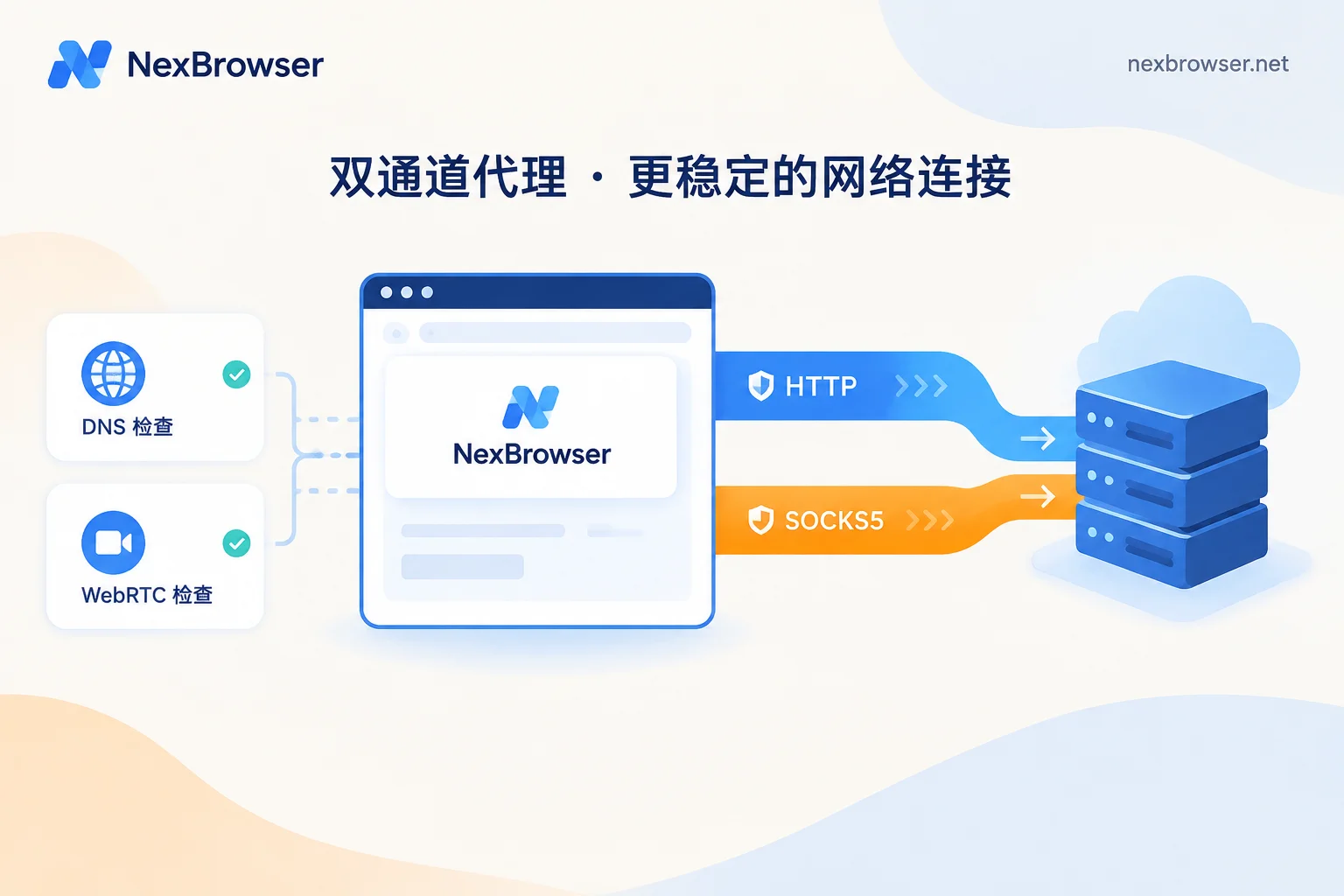
SOCKS5 vs HTTP Proxy for Browser Binding: Little Difference for Web Scenarios, But Check DNS and WebRTC
HTTP proxies work at the application layer to handle web traffic, while SOCKS5 operates at the session layer and simply forwards data. For multi-account browser management, as long as the exit IP, DNS resolution location, and WebRTC are verified, both protocols deliver essentially the same results for regular web browsing. This article explains their differences in protocol layer, connection overhead, DNS resolution, and UDP support, provides selection guidance for different scenarios, and offers step-by-step verification after binding.