 NexBrowser指纹浏览器-官方博客Blog
In the increasingly sophisticated landscape of modern digital operations, the evolution rate of platform risk control algorithms far exceeds the imagination of most practitioners. If you still rely solely on "clearing cookies" or "switching IPs" to manage multiple online assets, by 2026, the risk you face will not just be a reduction in account weight, but a complete ban.
Anti-detect browsers are no longer just tools for hackers; they have become "infrastructure" for cross-border trade, digital marketing, and data analysis. This article delves into which industries most need this technology and how to use it to build a secure business moat.
1. Why Can Ordinary Browsers Not Meet Business Needs?
Before discussing industry applications, we need to clarify a technical reality: the way platforms identify you has undergone a qualitative change.
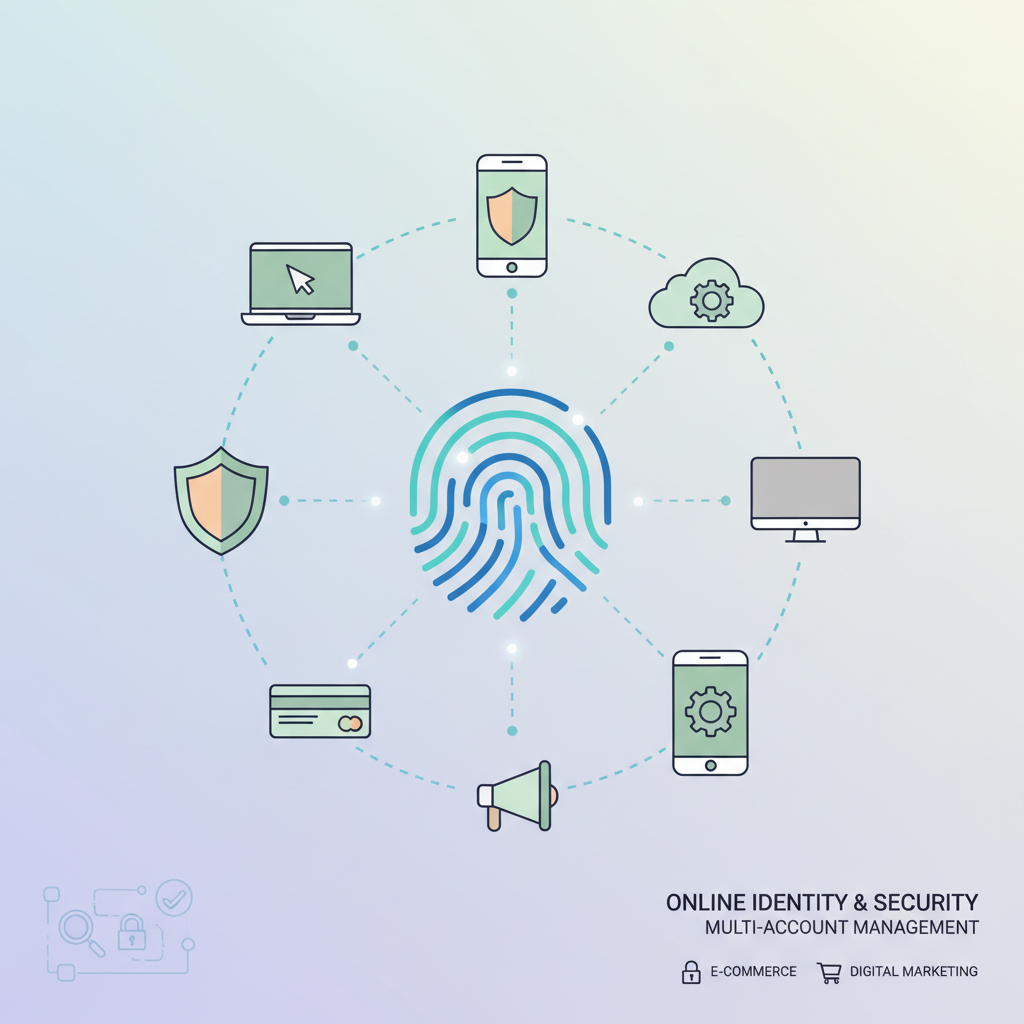
Traditional browsers (like Chrome, Edge) are designed to provide a consistent user experience, which causes them to unreservedly display your device parameters to websites. Platforms like Amazon, TikTok, and Facebook generate a unique "digital fingerprint" by reading your Canvas data, WebGL rendering features, font list, and even audio context.
No matter how you change your IP address, as long as this "fingerprint" remains unchanged, the platform can easily determine that multiple accounts are operated by the same person, thereby triggering an "association ban." This is the fundamental reason for the existence of fingerprint browsers—they can modify these underlying parameters at the software level, creating an independent, seemingly completely real virtual environment for each account.
2. Core Industry Application Scenarios for Fingerprint Browsers
Core Industry 1: Cross-Border E-commerce Multi-Store Operations (Amazon/Etsy/Shopee)
This is the area where fingerprint browsers are most widely used and where demand is strongest.
1. Pain Points:
Cross-border platforms (especially Amazon) have the strictest anti-association mechanisms globally. Once the system detects multiple stores logging in on the same device or similar fingerprint environments, it may at least require additional KYC information, or at worst directly revoke selling privileges and freeze funds.
2. Solutions:
For sellers operating dozens or even hundreds of stores, fingerprint browsers provide environment isolation. For example, sellers can use NexBrowser to configure independent browser fingerprint files for each store. Each file corresponds to a store, and the system will identify these environments as independent computers distributed around the world.
More importantly, e-commerce teams often require multi-person collaboration. Through the "group control" function of fingerprint browsers, the main account can authorize specific store environments to employee sub-accounts. Employees can log in and operate without knowing the password, and all operation logs are traceable. This permission management functionality is completely impossible to achieve with physical isolation (installing multiple network cables, buying multiple computers).
Core Industry 2: Social Media Matrix Marketing (TikTok/Facebook/Instagram)
As traffic dividends diminish, the "matrix account" strategy becomes key to acquiring low-cost traffic.
1. Pain Points:
The risk control logic of social media platforms differs from e-commerce; they focus more on "behavioral trajectories" and "device authenticity." If you frequently switch and log in to 10 TikTok accounts on the same computer, these accounts are easily flagged as "marketing accounts" or "bot accounts," resulting in zero video views or shadow bans.
2. Solutions:
Social media operations need to simulate real mobile environments. Excellent fingerprint browsers allow users to modify User-Agent, disguising a PC browser as an iPhone or Android device for access.
In this scenario, automation is also a key requirement. Through NexBrowser's built-in RPA (Robotic Process Automation) functionality, operators can set scripts to automatically perform account nurturing operations such as "browsing videos," "liking," and "commenting." This automation that simulates manual operations not only improves account nurturing efficiency but also avoids the detection risks associated with traditional script software.
Core Industry 3: Affiliate Marketing and Ad Placement (Affiliate & Ad Tech)
1. Pain Points:
The biggest challenge for media buyers is the unpredictability of ad accounts. Facebook Ads or Google Ads often block ad accounts due to ad copy violations or payment issues, and may even block the Business Manager (BM) altogether.
2. Solutions:
To spread risk, buyers typically need to stockpile a large number of backup accounts. Fingerprint browsers help buyers establish isolated ad environments to test different creatives and landing pages without being associated by the platform.
Additionally, when conducting competitor analysis, by simulating user environments from different countries (e.g., US, Brazil, Germany) via a fingerprint browser, buyers can accurately see the actual ad creatives competitors are running locally, avoiding misleading "geo-redirects."
Core Industry 4: Web Scraping and Data Mining
1. Pain Points:
For companies that need to scrape e-commerce prices, social sentiment, or flight data, the anti-scraping mechanisms of target websites pose a significant obstacle. Once the same fingerprint characteristics access at high frequency, IPs get blocked, and CAPTCHAs may appear.
2. Solutions:
Combining fingerprint browsers with a proxy IP pool enables high-concurrency humanized data collection. By continuously rotating browser fingerprints (not just IPs), the scraper behaves more like thousands of real users browsing the web, significantly reducing the probability of being detected and blocked by target websites.
3. How to Choose the Right Fingerprint Browser for Your Business?
In the 2026 market, choosing a tool is no longer just about "whether it prevents association," but more about "efficiency" and "cost-effectiveness."
- Kernel Update Speed: As platform detection technologies evolve, browser kernels must keep up with the latest versions of Chrome or Firefox.
- Automation Capability (RPA): This has become an industry standard. For example, NexBrowser mentioned earlier excels in simplifying complex programming scripts into visual RPA workflows, allowing e-commerce operators without coding knowledge to automate tasks like checking listings and nurturing accounts—very practical for small and medium teams looking to reduce labor costs.
- Cost Control: As the number of accounts increases, monthly subscription fees can be significant. Compared to the expensive "seat fees" of some older Western tools, choosing domestic tools with free quotas or more flexible pricing can significantly reduce operating costs.
- Team Collaboration Features: Check if it supports remote login synchronization, operation log recording, and fine-grained permission assignment.
4. Conclusion:
Fingerprint browsers have effectively become "safes" for digital assets. Whether it's store assets in cross-border e-commerce or account assets in social media marketing, their security directly impacts business survival. In the future, with the involvement of AI risk control, platforms' detection of "unnatural operations" will become even smarter. For practitioners, early deployment of compliant anti-association tech stacks and proficiency in tools like NexBrowser, which integrate RPA automation features, will be key to standing out in fierce market competition.
If you are managing more than 3 e-commerce stores or social media accounts, it is recommended to immediately review your current login environments. You can first try configuring an independent fingerprint browser environment for A/B testing, comparing traffic and account stability—this will be your first step toward refined operations.